
Political and military highlights of events over the past 24 hours. White House diplomacy amid a war of attrition
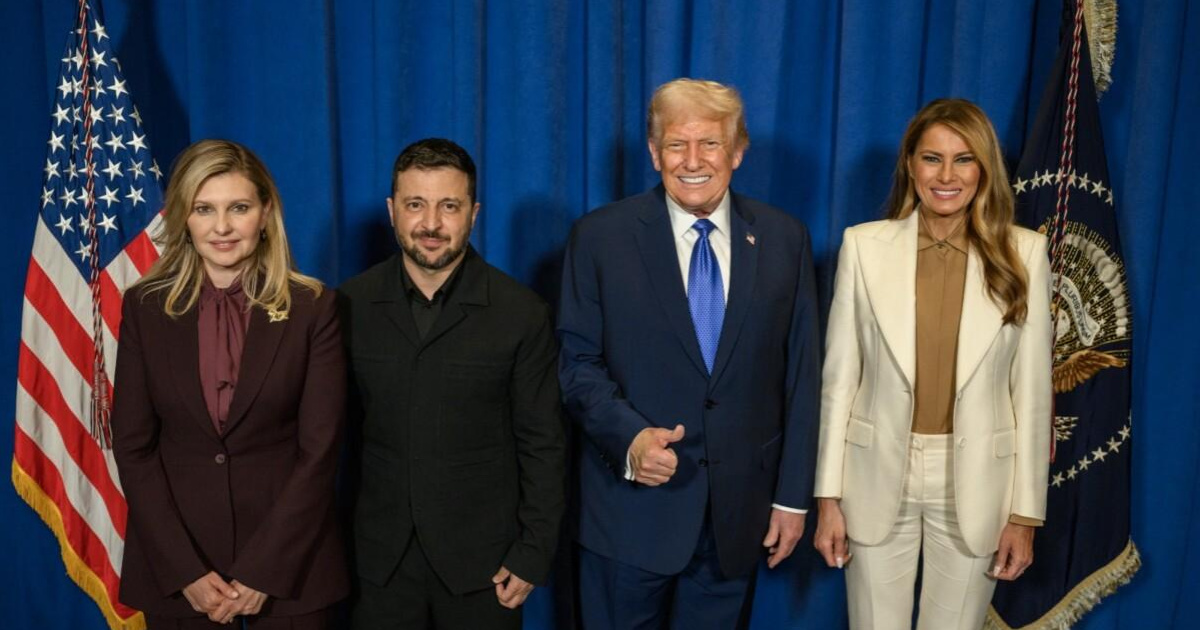
1. On November 5, U.S. First Lady Melania Trump met with representatives of Ukraine and russia at the White House to discuss a humanitarian ceasefire in the area of occupied Oleshky in the Kherson oblast. The U.S. side presented the six-day ceasefire, which allowed nearly 800 civilians to be evacuated, as an example of the possibility of reaching agreements between the parties to the conflict. Melania Trump called for continued humanitarian efforts and the expansion of localized ceasefires.
The meeting became an unusual episode in American diplomacy. In effect, the first lady's humanitarian initiative has evolved into a separate channel of communication between Ukraine and russia, operating alongside official negotiations to end the war.
For Donald Trump's administration, the humanitarian operation represents a tangible result of mediation that can be demonstrated even in the absence of progress toward a general ceasefire.
For Ukraine, however, the fundamental question remains whether such agreements can serve as the basis for broader de-escalation. After all, Ukraine's General Staff previously reported that during the ceasefire in Oleshky, russian forces used the pause to regroup and strengthen their positions.
Thus, the main contradiction underlying the U.S. initiative remains unresolved: humanitarian agreements can save lives, but without effective monitoring, they can simultaneously create military advantages for one of the parties.
2. On November 5, Ukrainian President Volodymyr Zelensky continued diplomatic consultations on preparations for trilateral talks between Ukraine, the United States, and russia in Abu Dhabi. The Ukrainian president discussed the negotiation process with representatives of the U.S. administration, Steve Witkoff and Jared Kushner, as well as with European Council President António Costa.
Preparations for the new round of talks are taking place against the backdrop of fundamental disagreements over the terms for ending the war, territorial issues, and Ukraine's future security guarantees.
For Washington, it is important to demonstrate that the negotiation process remains effective despite the absence of a final agreement. Kyiv, for its part, is seeking to ensure the participation of European partners in shaping the future security system.
The European factor could become one of the decisive elements in further consultations. After all, any agreement involving security guarantees, reconstruction funding, or monitoring of a ceasefire will require not only political decisions by the United States but also long-term commitments from European countries.
At the same time, the preparations for negotiations themselves do not indicate that a compromise is approaching. Until the parties agree on mechanisms for monitoring the cessation of hostilities and the implementation of possible agreements, diplomatic activity remains primarily an attempt to establish a framework for a future settlement.
3. Spain announced a new military aid package for Ukraine worth 437 million euros. The announcement was made on November 5 following a meeting between Volodymyr Zelensky and Spanish Prime Minister Pedro Sánchez in Madrid. The parties discussed Ukraine's defense needs, russian strikes on critical infrastructure, and support for the energy sector.
The new aid package demonstrates that European countries continue to view support for Ukraine's defense capabilities as a necessary component of their own security, regardless of the intensification of U.S.-mediated negotiations.
The combination of military and energy issues is particularly significant. Russian attacks are increasingly targeting not only electricity generation facilities but also transport infrastructure, logistics, and railway operations.
According to Zelensky, russia has damaged more Ukrainian locomotives during the current year than in all previous years of the full-scale war combined.
This indicates an expansion of russia's strategy of attrition. Strikes on the transport system can disrupt not only economic activity but also cargo transportation, civilian evacuations, and the supply of frontline areas.
Therefore, assistance from European partners is gradually extending beyond arms deliveries. Maintaining the operational capacity of Ukraine's energy and logistics systems is becoming a direct factor in the country's defense capabilities.
4. On November 5, the European Union transferred approximately 4.36 billion euros to Ukraine in financial assistance to cover budgetary and defense needs. The funds arrived amid discussions on further financing for Ukraine and mechanisms to support its economy amid the protracted war.
This decision is significant not merely as another financial tranche. It demonstrates that the European Union continues to establish long-term financing mechanisms for Ukraine without directly linking them to the outcomes of individual rounds of peace negotiations.
For Kyiv, the predictability of external assistance is critically important. The war requires simultaneous funding for defense, social payments, infrastructure reconstruction, and the functioning of government institutions.
Amid constant russian attacks on the energy sector and industry, Ukraine's domestic budgetary resources remain limited.
At the same time, for European partners, such assistance entails an increasingly significant financial responsibility for supporting Ukraine. This makes the issue of its future security part of the EU's own domestic economic and political debate.
Thus, financial support for Ukraine is gradually evolving from a crisis-response instrument into one of the components of Europe's long-term security policy.
5. On November 5, a total of 188 combat engagements took place along the front line, according to the General Staff of the Armed Forces of Ukraine. The most difficult situation remained on the Pokrovsk and Kostiantynivka directions. Russian forces continued their assault operations, using aircraft, guided aerial bombs, and attack drones. According to Ukrainian estimates, the russian army lost approximately 2,440 personnel over the past 24 hours.
Despite the intensification of diplomatic contacts, the intensity of hostilities remains high. The russian command continues offensive operations in Donbas, seeking to improve its positions ahead of a possible new round of negotiations.
The Pokrovsk and Kostiantynivka directions are of particular importance. Fighting in these areas directly affects the security of Ukrainian logistics routes and the defense of cities that remain important hubs of Ukraine's presence in Donetsk region.
At the same time, the scale of drone deployment indicates a further transformation in the nature of the war. Drones are increasingly performing functions that were previously assigned to artillery, aviation, and reconnaissance units.
Under these conditions, what becomes crucial is not only the size of military personnel but also armies' ability to ensure continuous reconnaissance, protect logistics, and strike targets promptly.
Thus, even in the absence of significant territorial changes, the war continues to exhaust both sides' resources. The situation on the front line remains one of the key factors that will determine their positions in future negotiations.
6. Ukraine's Defense Forces struck a number of russian army military facilities in the temporarily occupied territories of the Donetsk and Luhansk oblast on the night of November 5. According to the General Staff, the targets hit included an ammunition depot near Novoazovsk, a logistics depot in the area of Prohres, repair and recovery units near Talakivka and Nyzhnia Duvanka, as well as an enemy mobile firing unit in the area of Dontsivka.
Strikes on depots, repair units, and other support facilities demonstrate the Ukrainian command's intention to target not only the forward positions of russian troops but also the support system sustaining their offensive operations.
The destruction or damage of ammunition depots can disrupt supplies to russian units, while strikes on repair facilities can increase the time required to return damaged equipment to service.
Such operations are particularly important as the russian army continues to advance along several directions simultaneously. Disruptions to logistics and repair infrastructure can affect the pace of these operations even without direct changes to the front line.
At the same time, the overall military impact of the strikes will depend on the extent of the damage and the russian command's ability to replenish the resources lost.
Thus, amid Washington's diplomatic initiatives, Ukraine continues to use military means to limit the offensive capabilities of the russian federation. Diplomatic efforts and military operations remain parallel processes for now, rather than interchangeable ways of ending the war.