
Political and military highlights of the events of October 21. “Saving Private Trump”…
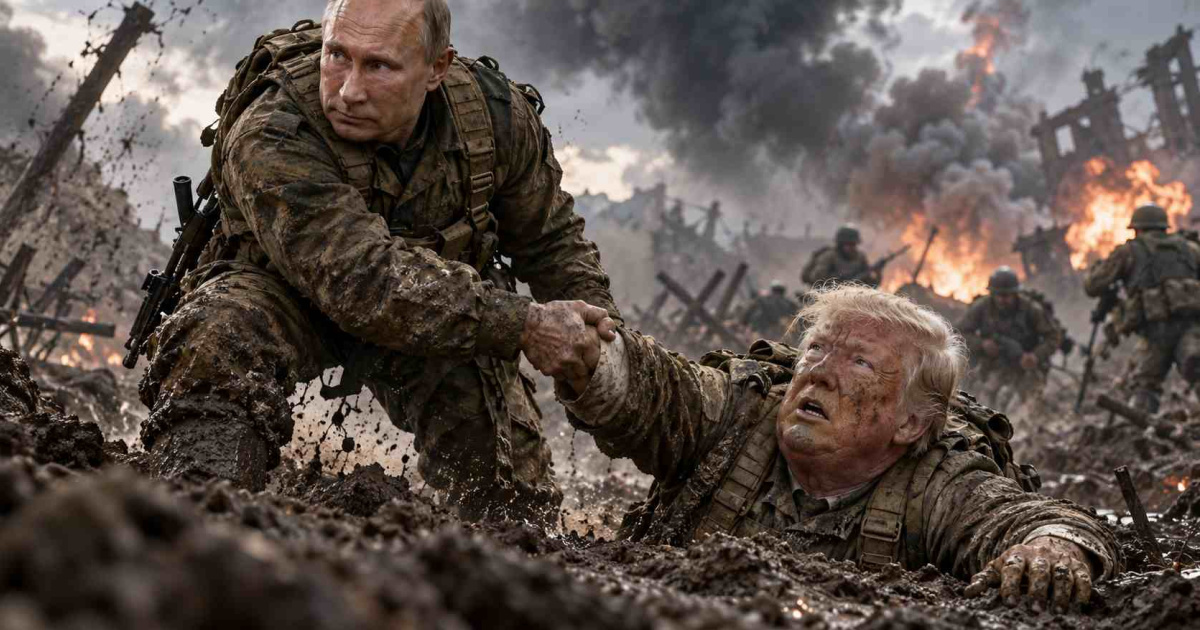
1. Trump’s special envoy Steve Witkoff held three hours of talks with putin in St. Petersburg and handed him “several documents” containing an updated plan to end the war. After the meeting, putin’s aide Ushakov said that moscow was “in principle” ready to resume trilateral talks with Ukraine and the U.S. around November 10. He described the outcome of the talks in Oslo as follows: they “did not contain much of value”. According to Ushakov, the russian side proposes discussing the creation of a security system for russia and Ukraine after the war ends. Ushakov also said that moscow and Washington are discussing the sale of foreign assets belonging to the russian oil company Lukoil. Their initial estimated value was around $22 billion. The kremlin is now counting on the possibility of extending the U.S. license required to sell the assets.
Putin’s agreement to hold trilateral talks after November 10, that is, after the U.S. midterm elections, looks like a lifeline thrown by the kremlin to its friend Trump. The American president gets another opportunity to declare for the 150th time that “peace in Ukraine is closer than ever”. At the same time, moscow has not abandoned either its strikes on Ukrainian cities or its plan to freeze Ukrainians during the winter by destroying Ukraine’s energy infrastructure. In other words, the resumption of negotiations absolutely does not mean that the prerequisites for a successful conclusion have emerged. Moreover, Trump’s policy of disarming Ukraine and lifting economic restrictions on the russian federation gives putin incentives to continue the war at least until he captures Donetsk oblast and establishes a 660-km “buffer zone”, plans for which he announced last week.
Moscow’s proposal to discuss a security system for russia and Ukraine during trilateral talks AFTER the war ends indicates that such negotiations could continue forever without having any impact on the course or duration of the war itself. Let me remind you that moscow benefits from the very fact of negotiations involving the U.S. The same goes for its “American partners”. However, moscow has made its refusal to participate in them a bargaining chip. Now, in exchange for simply resuming negotiations, the russian federation has obtained concessions from the U.S. in the form of eased sanctions and increased military pressure from Washington on Kyiv.
The fact that the White House is using negotiations with the russian federation to reach purely commercial bilateral agreements shows that Trump remains interested not in peace in Ukraine, but in creating conditions that would allow him to do business openly with russia and strengthen its economy in order to reduce putin’s dependence on China.
Moscow is seeking to link the peace process with the economic normalization of relations with the U.S., which strategically devalues years of Ukrainian resistance and the hundreds of thousands of casualties caused by this war.
2. During the talks with Witkoff, putin proposed discussing a meeting with Donald Trump in China in mid-November. On the same day, V. Zelensky, in an interview with Fox News, refused to accept a decision worked out by China, the U.S. and the kremlin without Kyiv’s participation: “Don’t talk about us without us”. The president reminded everyone that any agreement must be approved by the Verkhovna Rada.
The formula “don’t talk about us without us” and the reference to the Verkhovna Rada are Zelensky’s attempt to discredit in advance any agreement reached over his head. At the same time, it will be difficult for Zelensky to oppose a consolidated decision on Ukraine made by three superpowers. Parliamentary ratification shifts the territorial issue from the realm of the president’s personal decision to that of a constitutional procedure that neither Washington nor moscow can expedite.
3. In Luhansk, attack drones struck the building of the telecommunications company Luhacom, formerly Ukrtelecom, which provides mobile communications, internet access and data transmission in the occupied part of the Luhansk oblast. A similar strike had been carried out against the “republic’s” mobile operator in Donetsk the day before.
Strikes against the mobile operators of the “republics” do not target communications as a service, but rather the ability to govern the occupied territory and the capacity of the rear to support russian troops: mobile communications encompass both civilian internet access and a significant share of the official and military traffic of the occupation authorities.
For residents of the occupied territories, this means a new stage of everyday collapse, which Moscow will blame on “enemy attacks” rather than on twelve years of its own rule.
4. On the evening of October 21, reports emerged, citing a source in the Ukrainian government, that Warsaw had suspended the transfer of a major military aid package to Ukraine. The reason was the decision by the Lviv Oblast Council to declare 2027 the Year of Roman Shukhevych, the Ukrainian Insurgent Army (UPA) and Oleh Olzhych. Polish Prime Minister Donald Tusk called the decision by Lviv’s lawmakers unreasonable: “This harms Ukraine. It irritates us; we do not understand it”; Poland’s Minister of National Defence Władysław Kosiniak-Kamysz wrote that the decision deepened divisions, while Foreign Minister Radosław Sikorski demanded that the initiator be banned from entering the country. A number of Polish city mayors prepared decisions to suspend cooperation with Ukraine. Sviatoslav Sheremeta, the Lviv Oblast Council member who initiated the decision, was banned from entering the Schengen Area for five years; Ukraine’s Foreign Ministry called the regional council’s decision counterproductive, and the council itself deleted the announcement from its official platforms. Later, Polish Deputy Foreign Minister Marcin Bosacki said that representatives of the Ukrainian president had assured the Polish side that the Lviv Oblast Council’s decision would not be implemented.
At a time when Washington is bargaining with moscow and Poland is already entering an election cycle amid rising anti-Ukrainian sentiment, such decisions give Polish politicians a pretext for anti-Ukrainian actions and strengthen anti-Ukrainian political forces. The nationalist cultural policy promoted by Kyiv at the local level is a convenient tool for dividing society and manipulating domestic politics in ways that can help win elections, but it is already having a tangible impact on military aid to Ukraine and its aspirations for European integration. Sviatoslav Sheremeta’s actions look like a provocation aimed at weakening Poland’s support for Ukraine during the war with the russian Federation.
5. The National Anti-Corruption Bureau of Ukraine (NABU) and the Specialized Anti-Corruption Prosecutor’s Office (SAPO) conducted investigative actions at the National Bank of Ukraine and “at the place of residence of one of its employees”. According to Ukrainska Pravda and two members of parliament, the search took place in the office of NBU Governor Andriy Pyshnyi. Pyshnyi himself wrote that the investigation “does not concern either the activities of the NBU or my official duties”. The National Bank confirmed the investigative actions, stating that it was operating as usual, and denied reports that Pyshnyi had resigned.
A search of the central bank governor’s office is an unprecedented event even by Ukrainian standards. An institution entrusted by international partners with their money has come under suspicion. And this is happening while negotiations are underway over financing Ukraine for 2027. Such events could become a serious instrument of political pressure on Presidential Office. Anti-corruption agencies are closing in on schemes used to serve political interests through state-owned banks, which is undoubtedly important. However, the timing coincides with the pressure the White House is exerting on Zelensky’s Office to force Ukraine into peace on moscow’s terms, making this a dangerous factor in the geopolitical game being played by Ukraine’s enemies.