
Political and military highlights of the events of September 28 in Ukraine and the world. Zelensky has become synonymous with corruption…
1. Russia struck central Kyiv. The building of the Presidium of the National Academy of Sciences on Volodymyrska Street was damaged, an assistant to former National Security and Defense Council Secretary Volodymyr Horbulin was killed, and Horbulin himself was injured. The buildings of the Ministry of Education and Science and the Dobrobut medical center, as well as a gas station and a market, were also damaged.
The strike on the Presidium of the Academy of Sciences and the building of the relevant ministry was a demonstrative attack on targets just one kilometer from the government quarter. Russia is doing this precisely at a time when Washington is pushing the parties toward an energy truce, thereby showing that even if the parties reach an agreement on energy, an agreement concerning energy facilities does not extend to residential neighborhoods, schools, or scientific institutions. In other words, russia will continue to target the resilience of Ukraine’s urban population during the winter.
2. Ukrainian drones attacked oil depots in three districts of Krasnodar Krai on the night of September 28. The attack took place the day after Trump told reporters that he had asked Zelensky to “go easy on the oil refineries” and that Zelensky had allegedly agreed.
Ukraine did not strike an oil refinery, but rather storage and loading facilities — a link in the supply chain without which fuel cannot reach consumers or troops. Kyiv’s position is well thought out: Trump’s request is being “complied with”, while damage to russia’s oil and gas sector continues. This shifts the discussion of an “energy truce” away from the idea that “Ukraine is making concessions at Washington’s request” and toward an equal exchange involving energy security with moscow.
3. Andriy Biletskyi, commander of the Third Army Corps, reported the liberation of the villages of Nove, Ridkodub, and Katerynivka, as well as the restoration of control over Karpivka and Novomykhailivka during the third phase of Operation Vivaldi in the Lyman direction — 51 square kilometers liberated during this phase and 176 square kilometers since the start of the operation, with more than 2,000 enemy casualties and over 250 prisoners taken throughout the operation.
The effect is twofold: the methodical narrowing of the Lyman salient, and the 250 prisoners are an indication not only of the Armed Forces of Ukraine’s tactical success but also of the enemy’s command and supply problems. This is crucial for the negotiation track: the longer Ukraine retains the initiative near Lyman, the weaker moscow’s argument that territorial concessions are inevitable becomes. However, the greater the temptation for putin to compensate for failures on the ground with strikes on cities…
4. The EU Council meeting at the level of defense ministers concluded in Brussels without any new commitments to provide interceptor missiles for Ukraine’s air defense. Spain and Greece, which have interceptors in storage, were mentioned as potential donors. Interceptors were also absent from the latest US Patriot aid package.
The refusal of European capitals to open their own stockpiles is easy to explain: every Patriot missile handed over at a time when russian drones are entering Poland and the Baltic states creates a gap in national air defense. In other words, the kremlin’s strategy of intimidating Europe is already working and will therefore be scaled up.
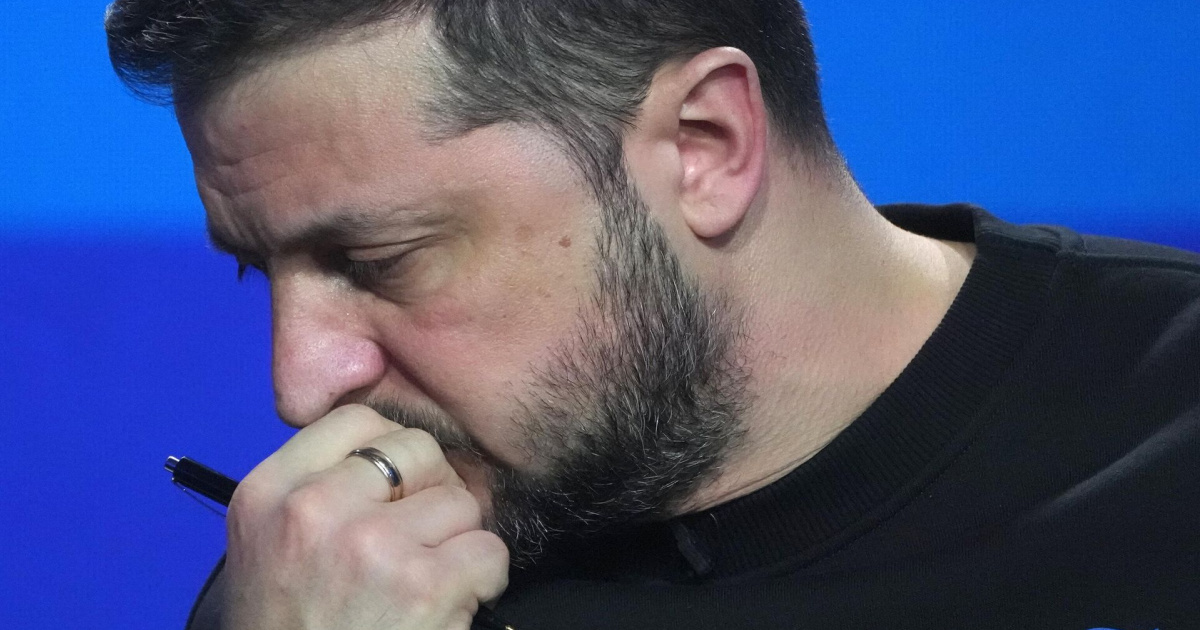
5. The Kyiv International Institute of Sociology published the results of a survey. According to the study, 72% of respondents believe that Volodymyr Zelensky bears personal political responsibility for corruption within his inner circle, while 25% disagree. The same percentage — 72% — believe that corruption has increased during the full-scale invasion. Corruption was named as the country’s main problem by 50% of respondents, russian missile and drone strikes by 40%, government incompetence by 30%, and the situation at the front by 21%.
The figure of 72% points to an extremely dangerous phenomenon: corruption in Ukraine has become personalized. Society no longer distinguishes between “corruption in general” and the president himself. When half of the population considers corruption a greater problem than shelling, a key wartime resource is eroded: the willingness to endure hardships for a common goal, trust in the state that needs to be defended — in other words, the very purpose of defense. This undermines mobilization, tax discipline, and the legitimacy of any unpopular decisions, including possible compromises in negotiations.
6. Putin signed a decree setting the authorized strength of the russian Armed Forces at 2,441,630 personnel, including 1,550,500 military personnel — 15,500 more than under the previous limit. This is the fourth increase in 2026 and the seventh since the start of the full-scale invasion.
At the same time, russian budget documents show that in 2027 moscow intends to spend 17.1 trillion rubles — about $203 billion — on national defense. This is 27% more than the previously planned 13.5 trillion and the highest amount since the start of the full-scale war. Moreover, moscow is doing this despite the deterioration of public finances. The budget deficit forecast for 2026 has been raised from 1.6% to 3.2% of GDP. Oil and gas revenues have been revised downward to 7.6 trillion rubles. The state will have to increase borrowing, use the National Wealth Fund, and introduce additional taxes…
Putin’s decree is the clearest indicator of his intentions. An army is not expanded if the plan is to end the war in the coming months. The budget also points to preparations for at least several more years of a very heavy military burden.
At the same time, it reveals the limits of the russian model: the war is increasingly being financed through deficits, tax increases, and the redistribution of resources from the civilian economy. In other words, putin is now waging war not at the state’s expense, but at the expense of businesses and the population, which threatens to undermine trust in him.
7. Poland announced that it was simplifying the rules for engaging aerial targets approaching from the direction of russia. The decision was made following a series of incidents.
Warsaw is effectively introducing wartime rules without declaring martial law. This marks a qualitative shift in NATO’s response to russian hybrid pressure. For Ukraine, this decision is both beneficial and dangerous: it brings NATO’s eastern flank closer to the idea of intercepting targets over Ukrainian territory, but at the same time shifts the attention and resources of European air defenses away from helping Kyiv and toward protecting their own skies…