
The outcome of the Trump, putin and Xi Meeting: general statements, oil and not a word about Ukraine
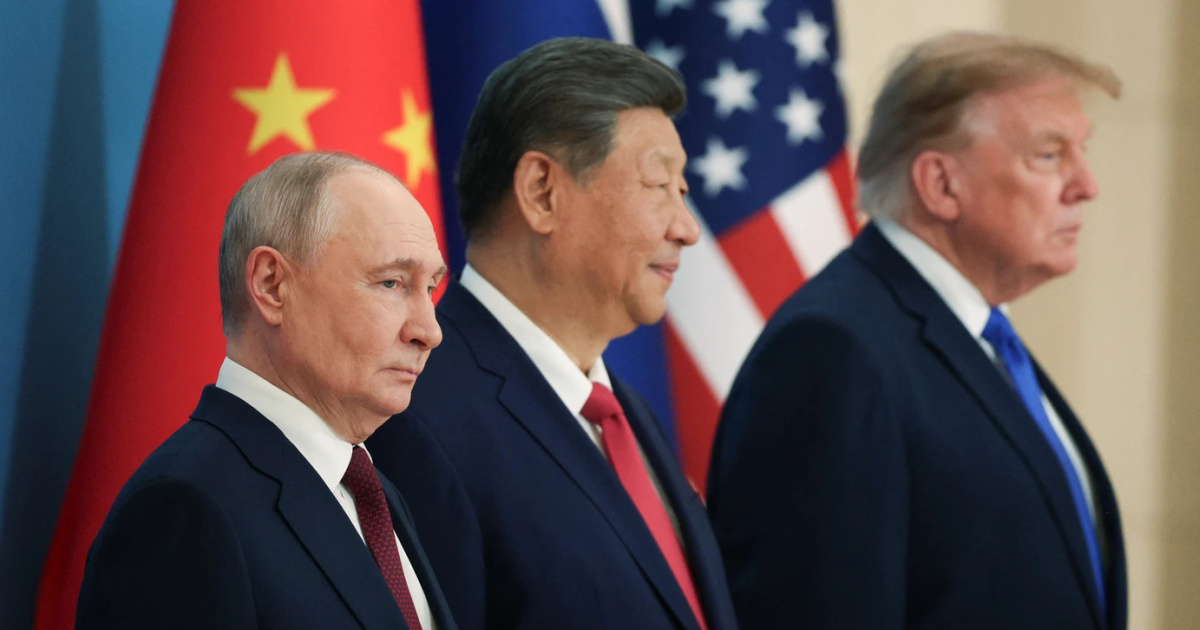
An unprecedented trilateral meeting between U.S. President Donald Trump, russian president vladimir putin, and Chinese President Xi Jinping has concluded in China. The talks, held on November 19 in Shenzhen, marked the first in-person meeting between the leaders of the three countries in this format. Following the talks, the parties released a joint "declaration on peace" outlining four areas of further cooperation.
In particular, Washington, Moscow and Beijing agreed to promote UN reform, increase the production and supply of petroleum products, called for respect for the immunities of government officials, and expressed their readiness to engage in dialogue on reducing nuclear risks and preventing the proliferation of nuclear weapons. A separate section of the declaration concerns the International Criminal Court: the three countries emphasized that it and other similar institutions must not abuse their jurisdiction.
At the same time, the document makes no mention whatsoever of Ukraine or the russian-Ukrainian war, although this issue was among those Donald Trump had planned to raise during the meeting. The declaration also contains no specific agreements on ending hostilities or further steps toward achieving peace. Thus, despite the high-profile diplomatic format and statements about shared responsibility for international security, the final document remained rather general.
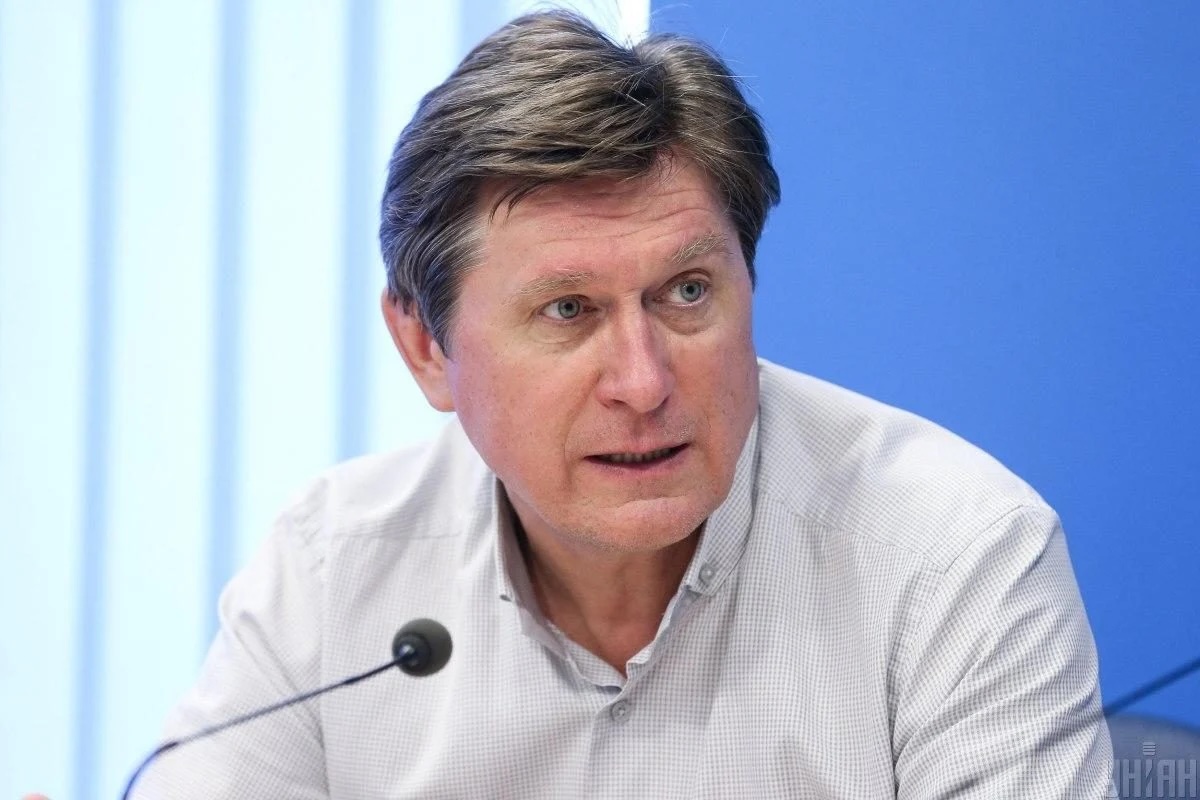
Ukrainian political analyst and director of the Penta Center for Political Studies Volodymyr Fesenko told OstroV in an interview whether this meeting signals the emergence of a new political alliance between the three countries, what Ukraine's absence from the final declaration means, and what prospects can now be expected for the negotiation process.
— The meeting between Trump, Xi and putin in China has concluded. What conclusions can be drawn?
— According to objective observers, there were no significant results. The russians managed to persuade their negotiating partners to adopt a joint statement, but it is very short and rather abstract.
Unfortunately, it demonstrated the three leaders' willingness to institutionalize this format. We will see whether it continues. This is important because the russians' goal is to try to create a kind of "big three" as a counterweight to the "G7". This is a very dangerous challenge in the long term, but it will only work under Trump. The situation will be different with a new U.S. president, especially if that president comes from a different political camp. However, for now, to our great regret, Trump is comfortable with this three-way game. It is consistent with his worldview.
— How do you assess the final declaration?
— They agreed on just four points, and, I would say, only one and a half of them contain anything concrete. The most specific point is the rejection of the International Criminal Court. This is where the interests of the three leaders converged. This is regrettable because we know how extremely negative Trump's attitude toward the ICC is, as is putin's. China joined in because this also represents a constraint for it: it understands that this is not an institution over which China has influence, and it also has its own grievances against it. So China has partially aligned itself with the positions of the U.S. and russia.
They reached a partial and rather abstract agreement on oil. The interests here differ in some respects, but all three leaders have something in common: the U.S. and China are interested in having more oil on the market, while russia is willing to provide it and wants to profit from it. There is also an indirect, rather than explicit, hint that the U.S. may agree to lift or ease oil sanctions against russia (China had previously opposed sanctions in general). In fact, they have already begun doing so with regard to diesel fuel. However, U.S. agreement does not mean that other Western countries will agree. So this is a matter of the United States' situational interests, primarily Trump's own interests.
The other two points are entirely abstract and merely symbolize a formal alignment of interests. Take, for example, the call for UN reform. It looks good to the international community, but we must understand that all three countries are permanent members of the UN Security Council and oppose any restrictions on their status or changes to the Security Council's status. Therefore, these three countries will not agree to genuine UN reform, as it does not serve their interests.
This is a very telling point. On the surface, it appears to be about supporting UN reform, but essentially it is yet another signal: "We are in charge here. Bear in mind that we are leading UN reform and will carry it out in our own interests".
Another point concerns nuclear weapons. This was important to the Americans, but it was worded in entirely abstract terms. It can be interpreted however China, russia, or the U.S. sees fit. There is nothing specific.
— And what did Trump want?
— The Americans wanted China to agree to negotiations on limiting strategic offensive arms. But Beijing is not willing to agree to this. The Americans also wanted a clear position on Iran's nuclear weapons, specifically a ban on Tehran possessing nuclear weapons. None of this is included in the joint statement.
— There is also no section on Ukraine. How significant is this?
— Yes, this is very significant. Because it means that the three leaders have no common position on Ukraine. Overall, this is good for us, but in reality, it means nothing, because this meeting will not affect the further course of negotiations. Unfortunately, what could have an impact is not a meeting of the three leaders, but Trump's communication with putin. There is a risk of manipulation here: putin knows how to manipulate Trump and may once again turn him against Ukraine or propose new harmful and insidious ideas for a peaceful settlement. We will see what happens next. In any case, we have learned how to neutralize this risk; it has arisen on numerous occasions before.
— In this context, what are the prospects for the negotiation process with russia as a whole?
— The prospects are uncertain and contradictory. The meeting of the three leaders will not affect the negotiation process. China will not intervene, and this is already evident. In particular, the absence of a section on Ukraine is indicative of precisely that.
China does not want to get involved in the negotiation process aimed at ending the russian-Ukrainian war. It considers this issue to have no prospects. Besides, why should it play along with Trump and putin on this matter? China has no interest here.
Other factors will have an impact. First and foremost, the U.S. position. For example, Witkoff and Kushner told the russians that this was their last chance to reach an agreement. But will russia want to negotiate? I have serious doubts. As long as the russians have an advantage in the air – I mean their superiority in ballistic missiles and our problems with interceptor missiles – moscow will not agree to a genuine ceasefire.
Russia's main strategy is to destroy Ukraine's energy infrastructure and attempt to trigger a humanitarian catastrophe in Ukraine during the winter. Negotiations, meanwhile, are for Trump, as well as a platform where the russians will put pressure on Ukraine to force us into an agreement on their terms.
This is unlikely to work, but nevertheless, as long as russia maintains its advantage in the air and the Americans continue making concessions to the russians, unfortunately, there will be no real prospects for genuine peace negotiations.
— Volodymyr Zelensky spoke about the possibility of Ukraine joining NATO in exchange for the withdrawal of Ukrainian troops from Donbas. Why has this idea emerged, and how realistic is it?
— In my view, what Zelensky said is most likely an idea being discussed and an attempt to sound out Ukraine's position. But if Ukraine is offered such a deal, we need to ask: why is Ukraine seeking to join NATO? Would Ukraine agree to withdraw its troops from Donbas? After all, the key element of this proposal is precisely the withdrawal of Ukrainian troops from Donbas. That is its main point, not the offer of NATO membership. No one is offering us NATO membership at this stage.
We must also understand that if this idea were serious, rather than simply an exchange of views during negotiations, we should remember that making a promise is not the same as delivering on it. The Americans' logic, as before, including regarding the security guarantees they supposedly promise us, is as follows: first, you withdraw your troops from Donbas, and then everything else will follow.
Joining NATO is a complicated process. First, a joint political decision must be made, and then each NATO member country must give its consent.
Let me remind you that when Finland and Sweden joined NATO, Finland obtained membership fairly quickly, while Sweden waited more than a year for approval from Turkey and Hungary. Turkey repeatedly pressured the Swedes to make certain concessions. The same thing could happen to us.
We must understand that even before this lengthy process begins, which could take more than a year, we will first be required to withdraw our troops from Donbas. And then something typical of Trump could happen: one position today, another tomorrow. Trump could change his mind.
Therefore, on the one hand, there is no confirmation that this is the official U.S. position, and I do not take this idea seriously. On the other hand, if it were serious, we would have to bear in mind that russia would be categorically opposed. It would not accept it.
Moreover, implementing this idea would require a lengthy process, and we could fall into a trap here. First, we would have to withdraw our troops from Donbas, and then we might never actually obtain NATO membership. Simply because someone could block it or the U.S. position could change. That is the situation with this idea, which, in my opinion, should not be taken seriously.
— Putin said that russia had proposed through diplomatic channels that European countries send representatives to moscow to establish their position. In this context, could Europe's role in the negotiations become decisive or be significantly strengthened?
— Europe's role in the negotiation process is already important. Note that both we and the Americans hold consultations with the Europeans before and after each round of negotiations. The Americans have already realized that negotiations need to be coordinated with Europe. Why? Because some provisions of the American peace plan require Europe's consent. This peace plan cannot be implemented without the Europeans. As for putin, his statement is an attempt to dictate his will to the Europeans.
— How?
— Russia will resort to blackmail. It has already started doing so, and now it has simply dressed its blackmail up in diplomatic language. In other words: if you want to participate in the negotiations, come to us and ask for our consent. But that consent will only be granted if the Europeans make concessions. And what is the main concession russia will demand? An end to arms supplies to Ukraine.
Therefore, my forecast is that nothing will come of these statements by putin. The whole initiative will quickly fall apart. But this does not mean that the Europeans will not participate in the negotiations. They will, but at a later stage.
This will happen, firstly, if the Americans insist on it. Secondly, if Europe clearly and firmly states its position to the russians: there can be no negotiations on European security without European participation. First and foremost, the Americans need to be told that no negotiations on European security make sense without Europe's consent. This message must also be conveyed to the russians. Europe's response to russian ultimatums must be a firm stance.
Our position is also important here: there will be no peace agreement on the russian-Ukrainian war without Europe's consent. Europe must be at the negotiating table, and its position must be firm. Only then will the process make sense.
What putin is proposing now is, in fact, an attempt to consolidate russia's dominant position in the negotiation process. This is roughly the same as putin's statements that if Zelensky wants to meet with him, he should come to moscow. No, not to moscow. Negotiations must take place under different conditions.
In my view, either Europe will participate in the negotiations to end the russian-Ukrainian war or, and it is only a matter of time, a separate negotiation track will emerge. This will be a separate track between russia and Europe or between russia and NATO, but linked to the negotiations on ending the russian-Ukrainian war.
I think this option has potential, but not right now. Most likely, it will not emerge before next year. That is when such a negotiation track may be established. Today, russia simply wants to force the Europeans to play by its rules.
By Vladyslav Bulatchyk, OstroV