
Russia’s autumn offensive, operation “Vivaldi” and Starlink restrictions: Roman Svitan on the situation at the front
Operation “Vivaldi” has changed the situation in certain sectors of the front and affected russian troops’ plans for further advances in Donbas. At the same time, the russian federation continues its offensive operations and is transferring reserves to key directions.
A separate issue is the possible consequences of restrictions on Starlink operations for the command and control of troops and drones. American intelligence support is no less important, particularly warnings about ballistic missile launches.
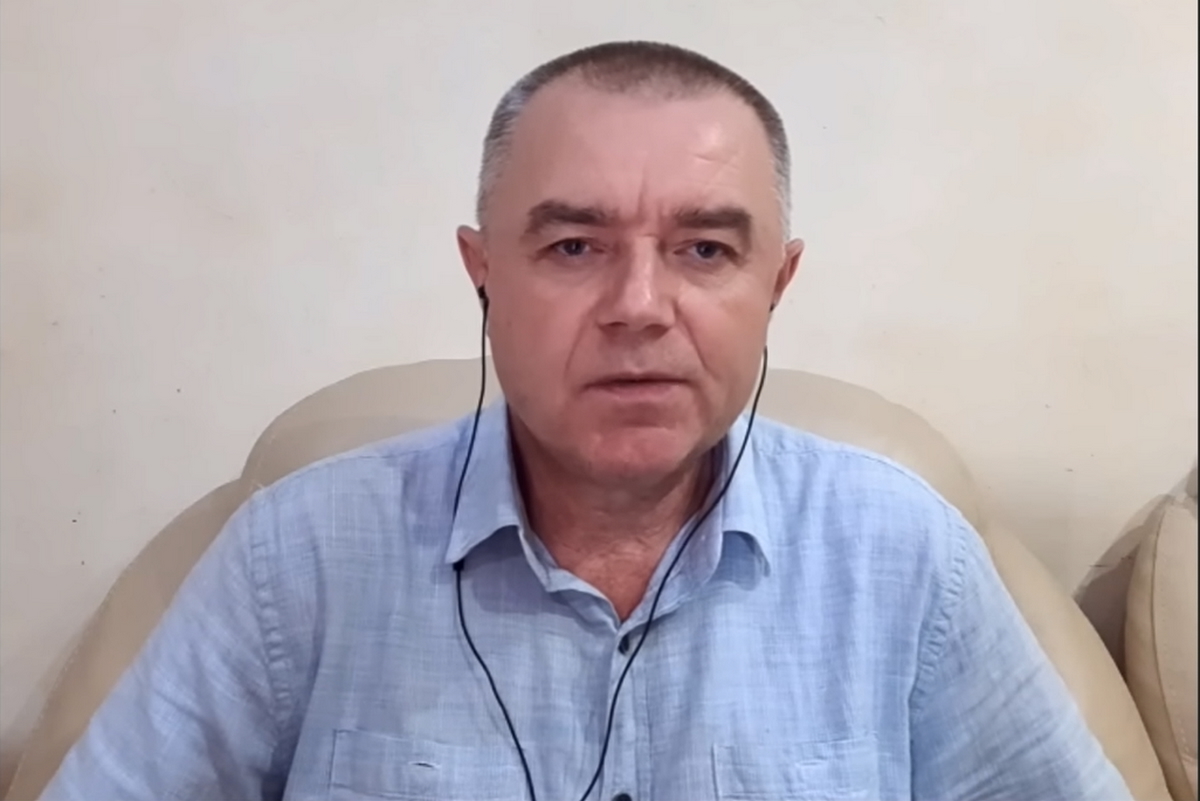
Military expert Roman Svitan spoke to OstroV in an interview about the situation at the front, the significance of Operation “Vivaldi” for the defense of Donbas, and how catastrophic the consequences of restrictions on Starlink operations and U.S. intelligence information would be.
— How would you comment on the situation at the front as of today?
— The autumn campaign has begun, or, in essence, the actual 2026 campaign that the russians had been preparing for. Their operational pause is over, and they have accumulated sufficient forces, resources and equipment. At the same time, we have stopped actively striking oil refineries.
Of course, they have a certain shortage of personnel, especially combat-ready troops. Nevertheless, the russians have begun moving equipment according to plan, under the cover of autumn fog, low clouds and rain. Columns are moving one after another. They are trying to advance along the directions they have prepared, meaning virtually every sector: around Orikhiv, Pokrovsk, Dobropillia, Kostiantynivka and Lyman, where equipment from the 1st Tank Army has already been redeployed. They are also trying to retake the right bank in the Kupiansk area. Strategic reserves are already being deployed or have been deployed almost everywhere, and reinforcements are arriving.
Therefore, the russians are making progress in some sectors, particularly around Pokrovsk and Kostiantynivka.
As for us, we have, so to speak, completed our counterstrikes. Operations to eliminate the bridgeheads the russians established over the summer were carried out at all the designated positions. Our forces performed well around Orikhiv and in the sector between Dobropillia and Kostiantynivka. Operation “Vivaldi” also produced a fairly good result: we advanced to the Chornyi Zherebets River, matching the level of progress in other directions. Our troops also performed well around Hlushkivka and Kupiansk, where the clearing of russian positions on the left bank is continuing.
Overall, all this can be described as “pushing and shoving” along the front line: shallow advances by both sides, each aimed at accomplishing a specific task, mostly at the tactical level, rather than even the operational level. These tasks are being carried out.
The russians identified several operational objectives, but failed to achieve them. As a result, almost all their strategic plans fell through. The russians have not managed to accomplish a single one of their designated strategic objectives this year.
— Why?
— This was made possible by successful tactical counterstrikes carried out by Ukrainian forces. They were carefully planned and well executed. At the same time, not all russian reserves have been committed yet. They will be able to sustain offensive operations for another month or two using the reserves that have already been deployed. So we can expect increased pressure from russian forces, using equipment under the cover of autumn weather.
— Tell us more about Operation “Vivaldi”: what did it actually achieve?
— In terms of its scale, it was a tactical operation, or at most an operational-tactical one. But the operation itself undermined the prospects for further development of russian strategic plans. In effect, they lost their strategic prospects for this year: reaching the Siverskyi Donets, cutting the Izium–Sloviansk highway, and advancing to Barvinkove. They definitely will not advance along this route this year.
This, in turn, makes it impossible or impractical for russian forces to advance from the south—from the direction of Pokrovsk and Myrnohrad—toward Huliaipole and Barvinkove. If the northern “pincer” is cut off, the southern one will not advance, because it will come under flanking attacks. The russians understand this perfectly well. Formally, we are talking about cutting off a single stretch several dozen kilometers long, no more. But the operation itself effectively halted the deployment of russian offensive operations. That is a strategic result. You could say that a tiny pinprick burst an entire bubble.
— In your opinion, could this operation be expanded and pushed further?
— No. There is nowhere to expand it, and there is no point. The thing is that once the objective has been achieved, the best option for us is to consolidate our positions along a river line—in this case, the Chornyi Zherebets—to strengthen our defenses. The russians will continue their offensive: they currently have superior forces and equipment, and strategic reserves intended for a further offensive have also been deployed to this direction. There will be no breakthrough toward Izium now, but the reserves themselves remain. The russians have now redeployed the 1st Tank Army from the Kupiansk area toward Lyman to stop our advance. Therefore, I believe Operation “Vivaldi” is over, at least its main phase.
— In your opinion, what should the further liberation of Donbas look like?
— From the standpoint of military expediency, the liberation of Donbas is possible only after the russian economy begins to collapse. Otherwise, we will suffer horrendous losses and simply will not be able to withstand them. We need to focus on destroying russia’s oil industry in order to undermine its economic power. The russian state is, after all, a resource-based state, and to defeat it, we must first and foremost destroy its human and economic resources. The liberation of territories will be a consequence of accomplishing this primary objective. Otherwise, it will not work.
— What consequences could restrictions on Starlink operations have?
— Certain types of operations, particularly those involving high-speed control, will have to be restricted. This mainly concerns drones, although not exclusively. The same applies to controlling the relevant strike systems, but the primary issue is unmanned aerial vehicles. Operational-level offensive operations, including those in the occupied territories of Ukraine and those involving aviation, will have to be conducted less intensively. The loss of communications will lead to a reduction in the intensity of offensive operations on Ukrainian territory.
— Is there an alternative?
— There is always an alternative; the only question is to what extent. Starlink definitely cannot be replaced completely. Starlink is satellite communications, and other satellite communication options exist. They may not provide full coverage or operate across the entire territory, but they are available nonetheless. Starlink is simply convenient to use: it operates virtually throughout the entire area that matters to us. Other solutions are fragmented. Starlink provides a sufficiently good communications channel around the clock. Without Starlink, things will be inconvenient, but it will not be a catastrophe.
— What consequences could restrictions on access to U.S. intelligence information have?
— For us, the most critical issue is advance warning of ballistic missile launches. There is almost nothing that can replace it. This information arrives several minutes before we detect the ballistic missile ourselves, giving us additional time to prepare for the strike. We have not replaced this capability with anything, so the provision of information is genuinely critical in this area.
Everything else is less critical: the Americans are not the only ones who have information about the location and real-time operation of various radar stations or aviation maneuvers. There is an alternative, albeit fragmented and primarily European. The French provide us with this information fairly well, so this issue can be resolved.
— How do you assess efforts to counter jet-powered “Shaheds”? It seems that there has been some success, especially in Kyiv.
— The thing is that a jet-powered “Shahed” is one of the easiest targets for an air defense system; it is difficult to imagine a better one. Back in the Soviet Union, jet-powered drones with similar specifications and the same speeds, equipped with turbojet engines, were specifically manufactured so that pilots and air defense crews could train against them. It is a good target: it is detectable by both radar and thermal imaging. Its speed is relatively low, and it does not maneuver. You could hardly imagine a better target. The question is what to shoot it down with and in what quantities.
We shot down these drones when there were roughly as many of them as missiles. They resemble cruise missiles. But a cruise missile can cost around one million dollars, and shooting one down requires an interceptor missile costing hundreds of thousands of dollars. That can still be justified to some extent. However, when the russians began using jet-powered “Shaheds” on a large scale, at an estimated cost of $60,000–70,000 each, shooting them down with missiles costing $200,000–300,000 became financially unviable.
In addition, some missiles that are excellent at shooting down jet-powered “Shaheds” and any similar targets cost around one million dollars. We have neither the money to buy them nor enough of these missiles.
Therefore, it was extremely important to find an inexpensive system for destroying such low-flying, relatively slow and non-maneuvering targets. The optimal option is short-range surface-to-air missile systems. We initially pursued the development of interceptor drones, but they are not a universal solution and cannot perform tasks across a wide range of speeds and altitudes. That was the main problem. When we placed our bets on interceptor drones, we failed to take into account that the russians would be able to equip their drones en masse with Chinese-made turbine engines.
As a result, we have accumulated a large number of interceptor drones, but they simply cannot catch up with jet-powered UAVs. Therefore, the main focus will now be on short-range surface-to-air missile systems.
According to information available in open sources, such systems are already being manufactured, while missiles for them are being developed and put into production (for example, the Luch Design Bureau has launched production of the RK-19 missile). Other missiles of this class are also emerging. Once we have at least several hundred short-range surface-to-air missile systems—we need at least around two hundred—we will be able to say that the problem of the mass deployment of russian jet-powered “Shaheds” has been solved.
For now, while short-range surface-to-air missile systems are not yet capable of fully carrying out combat missions, we will have to destroy russian “Shaheds” using medium-range missiles as well, which are very expensive. They are effective against targets, but they cost a lot, and we do not have as many of them as we would like.
The russians, meanwhile, are aiming to exhaust our medium-range air defense system so that they can then break through. They use heavy missiles and other weapons, counting on us having nothing left to engage subsequent targets. That is why we have to conserve ammunition.
At present, the full range of aviation assets is being used: army helicopters, fighter jets and light aircraft. The entire spectrum of aviation capabilities is engaged, and the defense is properly layered by altitude. We have at least three layers. Army aviation operates at altitudes of up to one kilometer, light aircraft at around three kilometers, while fighter jets operate across the full altitude range and engage targets that helicopter crews and light aircraft have failed to shoot down.
As for Kyiv, the number of drone incursions into the city has decreased. This does not necessarily mean that the number of drones themselves has fallen; it is specifically the number of incursions that has decreased.
— Is this thanks to the new system for defending the capital?
— Yes. A more effective defense system has now been established: it is not yet fully barrier-based, but it is already perimeter-based. Previously, each facility had to be defended directly in central Kyiv. Now the perimeter has been moved beyond the city limits, and drones heading toward the capital are being intercepted before they reach it. In the future, the system should transition to a barrier-based air defense model, in which virtually all russian aerial targets are intercepted and shot down along the front line.
By Vladyslav Bulatchik, OstroV