
CIA Director Ratcliffe in moscow, talks with russia and the surrender of Donbas – expert analysis
CIA Director John Ratcliffe made an unannounced visit to moscow on August 25, stayed there for several hours, and left russia without making any public statements about the results of his visit. Neither Washington D.C. nor moscow is in a hurry to disclose whom exactly the head of the U.S. intelligence agency spoke with or what they discussed. That is precisely why the trip has already sparked numerous assumptions, although there is still little reliable information about its substance.
The last time a CIA director visited moscow was in November 2021 – William Burns personally warned the russian leadership at the time about the consequences of a possible full-scale invasion of Ukraine. This time, the situation is fundamentally different: the war has been ongoing for several years, while diplomatic efforts to end it have so far produced no results.
Against this backdrop, there have been suggestions that one of the topics of Ratcliffe’s conversation with the russian side could have been the kremlin’s further plans. According to U.S. media reports, Washington D.C. has received intelligence about russia preparing for a possible new mobilization and intending to test NATO’s readiness for further escalation. Therefore, the CIA director’s trip may have been less an attempt to reach an agreement on ending the war than a direct signal to moscow regarding the consequences of its further actions.
OstroV spoke with political scientist Ihor Petrenko, head of the Analytical Center “United Ukraine”, about what lies behind John Ratcliffe’s visit to moscow, whether it could signal a new stage in negotiations, and how realistic it is to end the hostilities before winter.
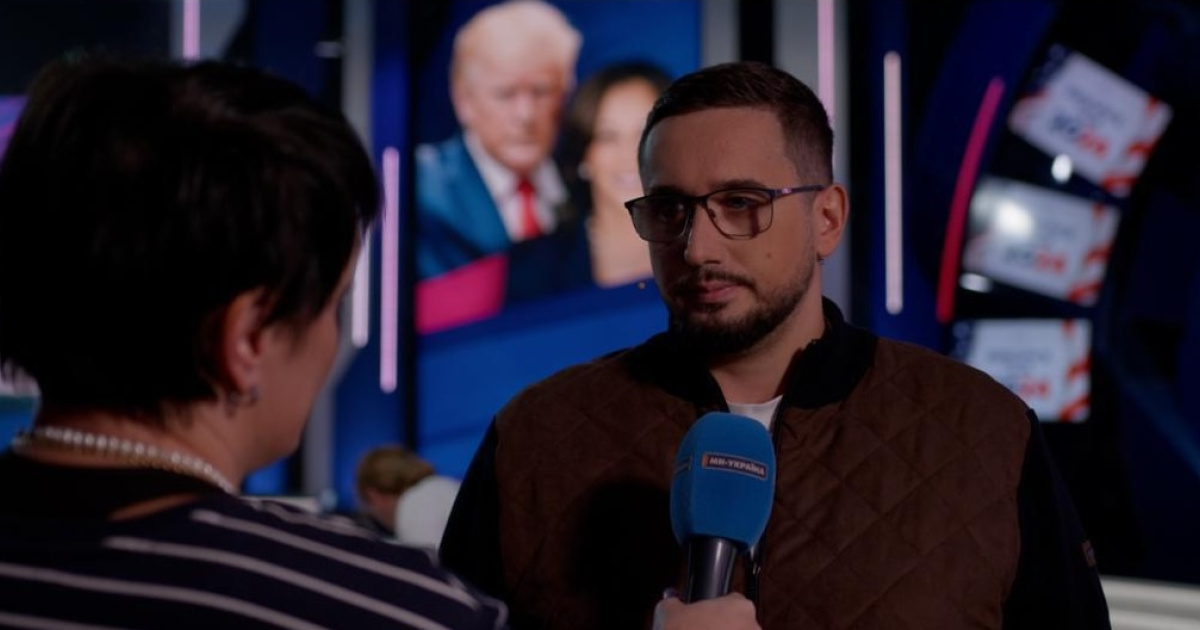
— How do you assess this visit? What could it indicate?
— That is a good question, actually. What could it indicate? That the Americans possess certain information about what the kremlin is preparing for. And, obviously, this either does not suit them or conflicts with certain plans, and so on. As a rule, CIA directors are sent to deliver a certain signal.
I think in this case, it is a signal of readiness for tougher and more decisive action if moscow does something along those lines. The issue of mobilization and potential provocative actions against members of the Alliance, testing its resilience – that is something that could indeed happen. And, obviously, this concerns the Americans.
— Could he have conveyed any proposals or messages?
— I do not think John Ratcliffe went there to convey any specific plans or proposals. They had too little time to communicate. Although he could have conveyed a proposal regarding certain specific issues, such as stopping strikes on energy infrastructure. But they certainly did not discuss the details. Rather, this visit is an indication of a certain concern on the part of the United States of America and the delivery of corresponding signals.
— In your opinion, how realistic is it to unblock the negotiation process in the near future?
— Theoretically, it is possible. We saw the leaks from the russian “Sberbank”, which assessed various scenarios and put the probability of a russian victory on its own terms at 7%, which is very low. And in fact, two prolonged scenarios that received more than 54% combined were about freezing the war under various conditions: creating a buffer zone, with certain guarantees, and so on. In other words, in any case, they involve concessions.
The rationalist wing in russia understands perfectly well that the economy is stagnating – that is a problem. That strikes on oil refineries and a reduction in oil and gas revenues are a problem. At the moment, russia is already experiencing not only economic issues, but also issues affecting a certain way of life for russians, which are important. In any case, this will lead to discontent, which sooner or later will be converted into something else.
So, there is theoretically a window of opportunity in the autumn period to begin real negotiations with a willingness to make concessions, rather than a set of propagandistic slogans. And right now, we can identify very specific factors that contribute to this.
But there is one problem we may run into – if putin’s actions stem not from a rational point of view but, for example, from his obsession with Ukraine as an issue. Making concessions here, retreating – that is the correct, rational strategy. But is he prepared to think rationally in this case? From his public statements, we can see that he is not. He thinks everything is going well for him, that everything is moving as it should. Although this clearly does not correspond to reality, and this is also obvious to his closest circle. Therefore, most likely, the problem here lies precisely with one person.
— How much does the prospect of a suspension of hostilities before winter, which was widely discussed six months ago, still remain? Or is this scenario already becoming less likely?
— I think russia is definitely not going to back down from continuing to put pressure on Donbas right now. But it could agree to an energy, agricultural, or grain truce, to some other mutual agreements and, perhaps, refrain from reciprocal terrorist strikes. Such a scenario is theoretically possible.
I think the CIA director’s visit was also intended to demonstrate the utopian nature of this scenario – that russia will not benefit from continuing to spend resources on capturing the entire Donbas. Ukraine, obviously, will not retreat without guarantees and without it looking like a surrender of territory.
Therefore, the issue of a conditional buffer zone under the control of a third party could theoretically be considered by Ukraine. In a sense, it would be “neither yours nor ours”, but with the possibility of continuing diplomatic negotiations and, in the long term, returning to these territories.
Any other option on the Ukrainian side would look like a surrender of territory.
By Vladyslav Bulatchik, OstroV