
Occupied Donbas in the 2026 russian State Duma elections
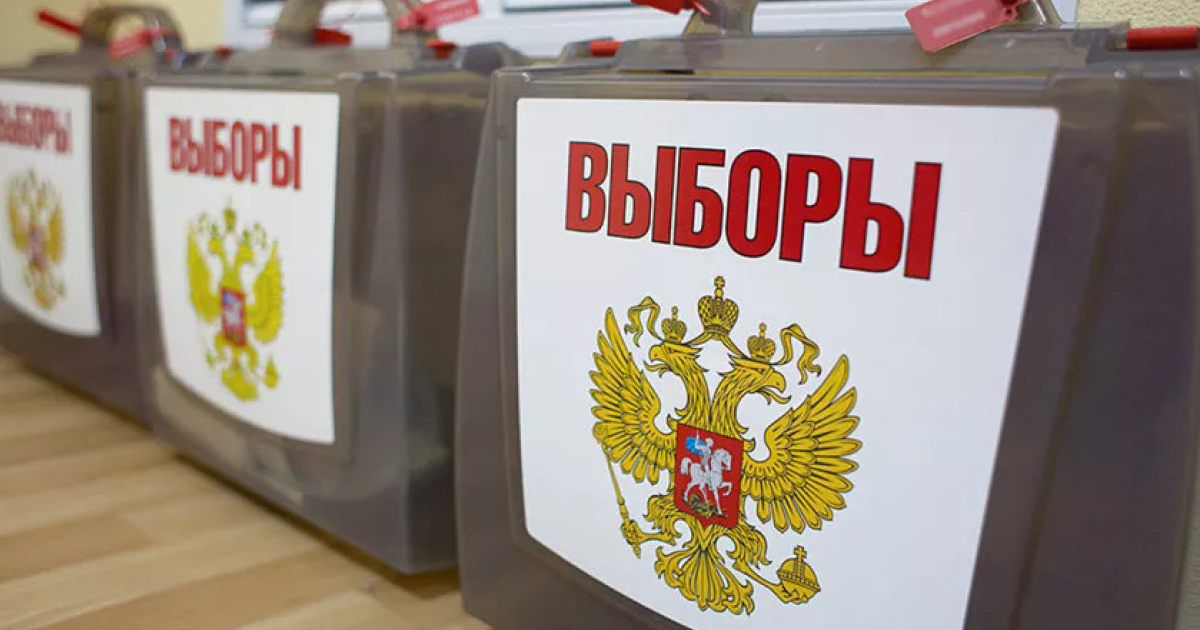
In September 2026, "elections" to the State Duma of the russian federation will be held in the occupied territories of Donbas. At first glance, under conditions of active hostilities, which residents of the Donetsk and Luhansk oblasts experience in their daily lives, it would seem impossible to conduct a free and competitive election campaign. The same applies to voting day itself. Many of these problems could be resolved through remote electronic voting, but the "republics" have already announced that it will not be used.
The head of russia's Central Election Commission, Ella Pamfilova, stated: "Holding elections for deputies to the State Duma in the territories of the reunified subjects is possible. Yes, it is difficult. But this is what the people are asking for". At the same time, the Ministry of Defense and the FSB participated in making the decision and are expected to ensure the "safe" and "free" "expression of the people's will".
It is clear that voting carried out under the risk of losing one's life is not what people are asking for—it is putin's demand. He needs to demonstrate a full-fledged electoral process in the occupied Ukrainian territories, signaling to everyone that the process of "integrating the new regions" is moving ahead in full.
In addition, these elections are valuable to the president of the russian federation because putin can once again reproach Kyiv by saying: look, we have elections, while you do not.
Another important aspect is the propaganda effect. Holding the elections is presented as proof of support for the war against Ukraine and for the president's policies. In this context, it will be important for the occupation authorities to demonstrate the "correct turnout" and a high level of support for the ruling party. This was the case, for example, during russia's 2024 presidential election. At that time, putin received 95.3% of the vote in the so-called "DNR" and 94.1% in the so-called "LNR", surpassed only by Chechnya (98.9%) and Tuva (95.3%).
A new electoral experience
Residents of the territories of the Donetsk and Luhansk oblasts not controlled by Ukraine will, for the first time, participate in the "elections" to the State Duma as residents of the so-called constituent entities of the russian federation.
Despite this, the "citizens" of the so-called "DNR" and "LNR" already have experience participating in the russian electoral process. During the 2021 elections to the State Duma of the russian federation, according to russian authorities, about 150,000 residents of the temporarily occupied areas of the Donetsk and Luhansk oblasts (CDDLO), to whom moscow had been issuing passports on a mass scale, cast ballots. Residents of the occupied part of Donbas voted both at polling stations in the Rostov oblast and remotely. To vote online, they had to register on the Gosuslugi government services portal and obtain a russian insurance number (SNILS). Human rights defenders and journalists reported intense pressure on public sector employees and students, who were required to obtain russian documents and participate in the vote.
After the annexation, the first nationwide electoral "baptism" for residents of the so-called "DNR" and "LNR" came during the 2024 presidential election.
And so, on June 16, the election campaign for the State Duma of the russian federation officially began. The occupied territories of Ukraine were labeled the "new regions". Special electoral districts were created specifically for them. Three districts were established in the Donetsk oblast, two in the Luhansk oblast, and one each in the Zaporizhzhia and Kherson oblasts. According to russia's Central Election Commission, the three districts in the so-called "DNR" included more than 1.6 million voters. The Makiivka District No. 13 includes 505,104 voters. The Donetsk District No. 14 includes 593,904 voters. The Horlivka District No. 15 (550,973 voters) includes not only Horlivka, Bakhmut, Debaltseve, Yenakiieve, Snizhne, Shakhtarsk, Yasynuvata, Chystiakove (formerly Torez before decommunization), Oleksandrivka, and the Kyivskyi and Kuibyshevskyi districts of Donetsk, but also Kramatorsk, Kostiantynivka, Lyman, and Sloviansk, which are not controlled by russian forces.
In the Luhansk oblast, two electoral districts were established, covering just over 1.2 million people. The Luhansk District No. 25 includes 609,256 voters, while the Alchevsk District No. 26 includes 630,857 voters.
In addition to the single-member constituencies, candidates from political parties running for the State Duma are also included in the federal party list, which is divided into regional groups. One of these groups represents the so-called "new regions".
The war as an election background
Compared to 2024, the situation has deteriorated significantly due to the expansion of the combat zone and the increasing activity of Ukrainian drones.
In the so-called "DNR", it has become dangerous to travel through areas that until recently were far from the front line. Yenakiieve is one example. Previously, UAVs rarely struck the city—the previous attack had occurred only in August 2025. In June 2026, however, the number of Ukrainian drone strikes on Yenakiieve increased severalfold.
People are being warned to avoid traveling on the Debaltseve–Vuhlehirsk–Yenakiieve, Yasynuvata–Panteleimonivka–Horlivka, and Donetsk–Mariupol routes. Roads leading to Melitopol and further toward Crimea, which had previously been considered safe, are now filled daily with the smoke of destroyed cargo trucks and fuel tankers.
Reports from the occupation "authorities" regularly mention Ukrainian strikes on Donetsk, Torez, Horlivka, Yenakiieve, Khartsyzk, and the Mangush, Volnovakha, Starobesheve, and Shakhtarsk "districts". The "mayor" of Horlivka, Ivan Prikhodko, has even urged employers to switch their staff to remote work.
The situation in Luhansk is no better. In addition to the city, drone strikes have also been recorded in Starobilsk, Lysychansk, Alchevsk, Kreminna, Pervomaisk, and Stakhanov.
After the Ukrainian Armed Forces struck oil refineries in southern russia that had supplied Donbas with fuel, serious shortages of gasoline and diesel began in Donetsk and Luhansk. Sales at gas stations are often limited to 20 liters per customer. According to local residents on social media, gasoline prices in Donbas are higher than in russia. Due to soaring fuel prices, transport operators have been forced to cancel intercity routes. Freight transportation costs have also surged, reaching a record annual increase of 28%.
Disruptions to logistics chains have also affected food supplies. Supermarkets in Luhansk periodically have empty shelves, especially when it comes to socially important goods such as flour and sugar. Bread shortages have been recorded in Rubizhne.
The so-called "DNR" is also experiencing disruptions in the delivery of goods and food. Because of the dangerous conditions on the roads, logistical problems, and the fuel crisis, pickup points and major online marketplaces are suspending operations or introducing restrictions. The long-standing problem of water supply has not disappeared either. After the Siverskyi Donets–Donbas Canal was completely destroyed during the fighting, Donetsk and the surrounding cities have been left without a stable water supply. According to local residents, "during good periods, water is supplied according to schedule—twice a week in the evenings for three hours; during bad periods, the schedule isn't followed at all".
The party landscape and the chances in the "elections"
The "elections" in the so-called "DNR" and "LNR" are not a contest of ideologies but rather a test of the effectiveness of the administrative machine. Only United Russia party appears to be a political monolith and the only player capable of effectively controlling that machine. The other parties either lack the necessary resources or see no point in investing in a campaign whose outcome is already predetermined.
United Russia was the first to begin establishing a party infrastructure in occupied Donbas. In October 2022, it created party branches in the so-called "DNR" and "LNR". Denis Pushilin and the chairman of the so-called "LNR People's Council", Denis Miroshnichenko, became the heads of the local organizations. Notably, both remain in charge of the local party structures to this day.
United Russia launched its State Duma campaign with party primaries. Between May and June 2026, it held so-called preliminary voting to determine the main contenders who were then officially nominated by the party.
In the so-called "DNR", the largest number of votes on the party list went to: Sergei Dobrovolskyi, head of the local branch of the Young Guard youth organization; Viktor Nikolaienko, a current deputy of the so-called "DNR People's Council" and former head of the Internal Policy Department of the Donetsk Oblast State Administration during Ukraine's administration of the region; Dmitri Hartsev, chairman of the so-called "DNR" Healthcare Workers Association; Petr Piatybratov, a deputy of the so-called "DNR People's Council"; and Olga Pozdniakova, head of the United Directorate of Specially Protected Natural Areas of the so-called "DNR".
In the single-member districts, the leading candidates were: Irina Kuksenkova, a russian Z-propagandist and special correspondent for Channel One; former so-called "DNR prime minister", now a State Duma deputy, Aleksandr Borodai; and Sergei Makarov, deputy technical director of the Impex-Don coal holding company. According to the "republics", a total of 56,768 people took part in United Russia's preliminary voting in the so-called "DNR".
In the so-called "LNR", 13 candidates competed in the party-list primaries. The largest number of votes was received by incumbent State Duma deputy Viktor Vodolatsky; Yan Leshchenko, a deputy of the so-called "LNR People's Council" and participant in the so-called "special military operation"; and independent candidate Anna Yeremenko, head of the executive committee of the regional branch of the People's Front.
Among the single-member candidates, the leaders were so-called "LNR People's Council deputy" Denis Kolesnikov and his colleague Ivan Sanaiev.
At the United Russia party congress, both part of the federal party list and the regional groups were approved. The territories annexed by russia after 2022 were placed in Regional Group No. 57. An analysis of the top five candidates on the regional list for the "new territories" shows that the key positions were occupied by "big brothers" rather than local nominees. As a result, the United Russia primaries turned out to be little more than a sham for local party members.
The first position on the list belongs to incumbent State Duma deputy Viktor Vodolatsky (leader of the Don Cossacks and the State Duma's curator for the so-called "LNR"). A native of the Rostov oblast, he was among the authors of the February 2022 appeal to putin calling for recognition of the so-called "DNR" and "LNR". He became known for declaring that basic military training should begin in the fifth grade because "we will have to fight NATO".
He is followed on the list by former russian Human Rights Commissioner Tatyana Moskalkova; political scientist and head of the Russkiy Mir Foundation Vyacheslav Nikonov; and Admiral Vladimir Kasatonov, Chief of the Main Naval Staff of the russian Navy.
It is evident that Moskalkova was sent to the State Duma as a form of political retirement. She had previously served as a State Duma deputy, although from the A Just Russia party, and has never commented on her decision to join United Russia. Nikonov—jokingly referred to as the grandson of the "Molotov-Ribbentrop Pact"—is a well-known media figure. In the previous State Duma elections, he ran from the Rostov oblast. Admiral Kasatonov's presence in the top five appears equally unusual, fitting neatly into the grotesque absurdity of the old joke about "a submarine in the steppes of Ukraine". Rounding out the top five is Yan Leshchenko from the so-called "LNR". However, he most likely earned his place not as a representative of the local elite but as a participant in the so-called "special military operation", which has now become an essential credential for russian party structures.
Regional Group No. 57 contains a total of 20 candidates. Five represent the so-called "DNR", while three represent the so-called "LNR".
In the 2021 State Duma elections, United Russia received 49.82% of the vote, and 126 people became deputies through the party lists, averaging 2–3 people from each regional group. Today, however, according to the russian Public Opinion Research Center, if the elections were held next Sunday, only 34% would be ready to vote for United Russia. Thus, for now, the prospects of the "Donetsk" and "Luhansk" members of United Russia becoming deputies appear highly uncertain. Even if one hypothetically assumes that United Russia repeats its 2021 result, and the local authorities in the occupied territories of Ukraine "draw" 80% support for United Russia, then even in that case, the only person with a real chance of entering parliament through the party lists is probably Luhansk native Yan Leshchenko. Everyone else is merely background figures demonstrating the supposedly successful "integration" of the regions into the political life of the russian federation.
As for the single-member constituencies, everything is clear there. United Russia is guaranteed to receive five mandates in the so-called "DNR" and "LNR". The ruling party knows how to "achieve" results in single-member districts. Therefore, the two russians Kuksenkova and Borodai, along with the Donetsk-Luhansk trio of collaborators — Makarov, Kolesnikov, and Sanaev — can already be congratulated on their victory today.
The information agenda of United Russia in the so-called "DNR" and "LNR" is typical for the ruling party. Officials report on the "successes in reviving their native Donbas": visiting enterprises, meeting with employees, holding public receptions, and paying "attention" to housing, utilities, and social issues. Every day, members of United Russia also report their "good deeds": repaired roads, the progress of reconstruction work, visits to pensioners, and the distribution of humanitarian aid. The official United Russia websites in the so-called "DNR" and "LNR" are virtually identical, differing only in surnames. Official campaigning has not yet begun (it starts on August 22), but the ruling party's candidates are already actively campaigning across all information platforms.
To secure victory for United Russia, the authorities are actively using administrative resources. At the very least, the head of the "Donetsk" communists, Boris Litvinov, speaking at a meeting with the party's Makiivka activists, complained that there had been documented cases of intimidating citizens and attempts to coerce them into voting for the opponents of the Communist Party of the russian federation through the use of administrative resources at the local level. As always, the communists were "tactful" and did not directly name the political force that is the chief administrator of those administrative resources in the so-called "DNR" and "LNR".
United Russia's competitors in the electoral field in the so-called "DNR" and "LNR" also began establishing themselves there in 2022.
Interestingly, the founding conference of the regional branch of the LDPR in the so-called "DNR" was held, for some reason, in the Rostov oblast. The branch coordinator became Andrey Kramar, a native of the Smolensk oblast and a longtime associate of the head of the "republic", Denis Pushilin, dating back to the MMM days. The LDPR branch then opened in the so-called "LNR". Party leader Leonid Slutsky attended the founding conference. Maksim Uvarov, a deputy of the so-called "People's Council of the LNR", was elected coordinator of the Luhansk branch.
For the State Duma elections, the LDPR organizations in the so-called "DNR" and "LNR" nominated candidates primarily in single-member constituencies. In the Makiivka District No. 13, agribusinessman Sergei Eroputov will compete against United Russia's Kuksenkova.
In the Donetsk District No. 14, Borodai will face Denis Karoyani, a close associate of the head of the Donetsk branch of the LDPR.
In Horlivka District No. 15, Andrei Kramar will run for office. And, surprisingly enough, this district could become an intriguing contest. Kramar's opponent from United Russia will be the "economic manager" Sergei Makarov, who is clearly less experienced politically. It should be noted here how active Kramar has become thanks to his position as "Deputy Chairman of the People's Council" of the so-called "republic" and his friendship with Pushilin, along with his local team, which includes many city and district "deputies". A quick look at the local news is enough to see that they are in no way less active than the local members of United Russia. They engage in charity work, use their deputy status to receive citizens, and even organize "people's control" inspections at Donetsk markets. Thus, Kramar is вполне capable of pulling off a surprise in the Horlivka District—provided, of course, that his "senior comrade" Pushilin does not stop him in time. After all, "friendship is friendship, but business is business". Pushilin's main priority is the victory of United Russia.
The Luhansk LDPR organization is also fielding three candidates in the elections. In the single-member constituencies: the head of the local regional LDPR branch, Maksim Uvarov, and "People's Council deputy" Galina Dubrova. In the LDPR regional party list, where the so-called "LNR" has for some reason been grouped together with the Rostov oblast, the local branch is represented by youth activist and "People's Council deputy" Yuri Rahulin.
It should be said that, unlike their "Donetsk" colleagues, the local LDPR members have not shown much activity. Their party website contains only information about the party's work at the federal level. There is no news whatsoever about the life of the regional organization, creating the impression that the party in the so-called "LNR" exists only on paper. The only achievement that the Luhansk LDPR representatives loudly proclaimed was that they beat United Russia by being the first to submit candidate registration documents to the local "election commission". It is obvious that the LDPR has little prospect of success in the so-called "DNR" and "LNR".
The Communist Party of the russian federation (CPRF) opened its first branch in the so-called "LNR" in December 2022. At that time, Igor Humenyuk, the leader of the "Union of Luhansk Communists" movement, was elected first secretary. A regional branch was later established in the so-called "DNR" as well. It was headed by Boris Litvinov.
For the State Duma elections, candidates from the so-called "DNR" and "LNR" were combined into a single regional group with other annexed territories of Ukraine—Crimea, Sevastopol, the Zaporizhzhia, and Kherson oblasts. The list contains a total of 15 candidates. The regional group is headed by russian cosmonaut Oleg Novitsky.
The regional list from the so-called "DNR" includes Boris Litvinov, the first secretary of the "republican" branch of the CPRF, and Sergei, the son of the first "head of the DNR", Zakharchenko. He is 27 years old and a participant in the so-called "special military operation". The party membership card was personally presented to the militant by the leader of the russian communists, Gennady Zyuganov. After another injury, Zakharchenko was promoted within the party hierarchy by being elected a member of the Central Committee of the CPRF. It is said that Pushilin, who had been in conflict with his late father, once blocked the younger Zakharchenko's path into United Russia. After that, the communists welcomed him into their ranks with open arms.
In the so-called "LNR", two more participants in the war against Ukraine were included on the russian communists' party list: Vitali Narizhny, head of the Audit and Control Commission of the regional CPRF branch, and "People's Council deputy" Aleksei Bebeshko.
As for nominations in the single-member constituencies, the communists in the so-called "DNR" and "LNR" have come up with a "know-how". Candidates running on the regional party lists are also being nominated in single-member constituencies. The CPRF has not explained what prompted this unexpected decision.
As for the information agenda of the communists in the so-called "DNR", they seem frozen in "bronze and granite": "Under the leadership of the First Secretary of the Donetsk 'republican' branch of the CPRF, leader of the CPRF faction in the 'People's Council', Boris Litvinov, the party organizations are consistently implementing the provisions of the CPRF Victory Program. This strategic document, developed under the leadership of party leader Gennady Zyuganov, is intended to offer effective solutions for overcoming crisis phenomena and redirecting economic policy in the interests of broad sections of the population", according to the materials of the party Plenum.
However, there are also some progressive notes. The CPRF supports restoring access to the Telegram messenger. Even the local website of the "Donetsk" communists does not ignore this issue. The CPRF approaches the war against Ukraine cautiously. As one political strategist told Novaya Gazeta Europe: "Within the party, the issue has been left to the candidates. Harsh criticism of the war is prohibited, but it is acceptable to speak about the need for peace and the suffering of civilians". For this, the CPRF has already been dubbed "the party of neither war nor peace". As for United Russia, there are differing opinions within the party: either confront the issue aggressively or, on the contrary, keep a lower profile. In the so-called "republics", if the communists criticize United Russia, they do so very mildly. At the federal level, the CPRF's main objective is to retain second place. Evidently, the local communists in the so-called "DNR" and "LNR" are aiming for the same result.
A Just Russia was the last of the russian parliamentary parties to begin establishing its party structures in the so-called "DNR" and "LNR". Today, the local organization in the annexed part of the Donetsk oblast is headed by lawyer Oksana Sigidina, who replaced one of the federal leaders of A Just Russia, State Duma deputy Yelena Drapeko. This happened after A Just Russia failed to clear the electoral threshold in the 2023 "People's Council" "elections". The party has been more successful in the Luhansk oblast, where it is headed by the "leader of the faction in the People's Council", Gennady Tarakanov.
The A Just Russia party organizations in the so-called "DNR" and "LNR" nominated candidates in all five single-member constituencies, while the heads of the local A Just Russia branches were also included on the regional party list representing all Ukrainian territories annexed by the russian federation.
The most unexpected development was that Sergei Arbuzov—the former First Deputy Prime Minister and former head of the National Bank during the presidency of Viktor Yanukovych—was placed first on Regional Group No. 5. The decision to nominate him became one of the most discussed topics following the party congress and sparked outrage both among experts and in society. One russian blogger from the so-called "DNR" called Arbuzov's candidacy for the State Duma from A Just Russia "a spit in Donbas". Another "republican" propagandist described him as a worthless coward from Yanukovych's team who "...screwed up Ukraine as we knew it before 2014". A number of Telegram channels linked Arbuzov's appearance on the party list to the alleged strengthening of the influence of structures associated with Viktor Medvedchuk. A Just Russia itself did not publicly comment on why Arbuzov had been chosen.
In both the so-called "DNR" and "LNR", the party's information agenda focuses on housing and utility issues, particularly its demand to cancel the increase in housing and utility tariffs scheduled to take effect in the russian federation on October 1. In Luhansk, a one-person picket was held to collect signatures calling for the government decisions to be repealed. In Donetsk, activists took to the streets, speaking with residents, gathering signatures, and distributing the party newspaper. Overall, the A Just Russia party structures, while small in number, are active. Nevertheless, A Just Russia has virtually no chance in the State Duma elections in the so-called "republics". Judging by everything, the party will have to settle for the crumbs of the electoral pie that United Russia cannot "swallow".
New People, like all the parliamentary parties of the russian federation, established its party structures in the so-called "DNR" and "LNR" at the end of 2022. Initially, the Donetsk party organization was headed by Voronezh activist Sergei Gurchenko. He was later replaced by local nominee Aleksei Dorofeyev. The party made it through the "elections" to the so-called "People's Council" of the "republic", secured four mandates and its own faction, while Dorofeyev became deputy "chairman of the People's Council". The local branch has shown no signs of activity on the election front. It communicates with residents exclusively through the VKontakte social network. Its campaign is built around the federal agenda, promoting initiatives by party leader Aleksei Nechayev that sometimes provoke nothing more than a smile—whether proposing to allow flight attendants to work without high heels or banning animal acts in circuses.
New People positions itself as a moderate urban opposition party—advocating soft liberalism, support for business, and digital freedom—which resonates poorly with the priorities of frontline territories, where security and social assistance dominate public concerns. As for the war in Ukraine, New People has never spoken out against it. However, the party focuses on the issue far less than the other parliamentary parties. In the 2023 "elections" to the so-called "People's Council" of the "DNR", New People barely cleared the five-percent electoral threshold, receiving 5.14%, unlike their counterparts in Luhansk, who received only 1.82%.
Despite the fact that, at the federal level, sociologists currently record support for New People at around 10%, its result in the so-called "DNR" and "LNR" will likely be within the statistical margin of error.
In any case, it is impossible to assess the real electoral support for political parties there. No open public opinion polling is conducted because there is no safe environment for collecting data. Even without polling, however, it is clear that the main beneficiary of the "elections" will be the local authorities and their political branch, United Russia. Possessing overwhelming administrative resources and facing no real competition from its opponents, United Russia resembles a political monster in the so-called "DNR" and "LNR", much like the Party of Regions once did in Ukraine. All the others are destined to play the role of "Olympians", whose main motto is: "The important thing is not to win, but to take part".
By Ihor Alieksieienko, for OstroV