
State of emergency in Crimea: "An order was received to free up as many hospital beds as possible"
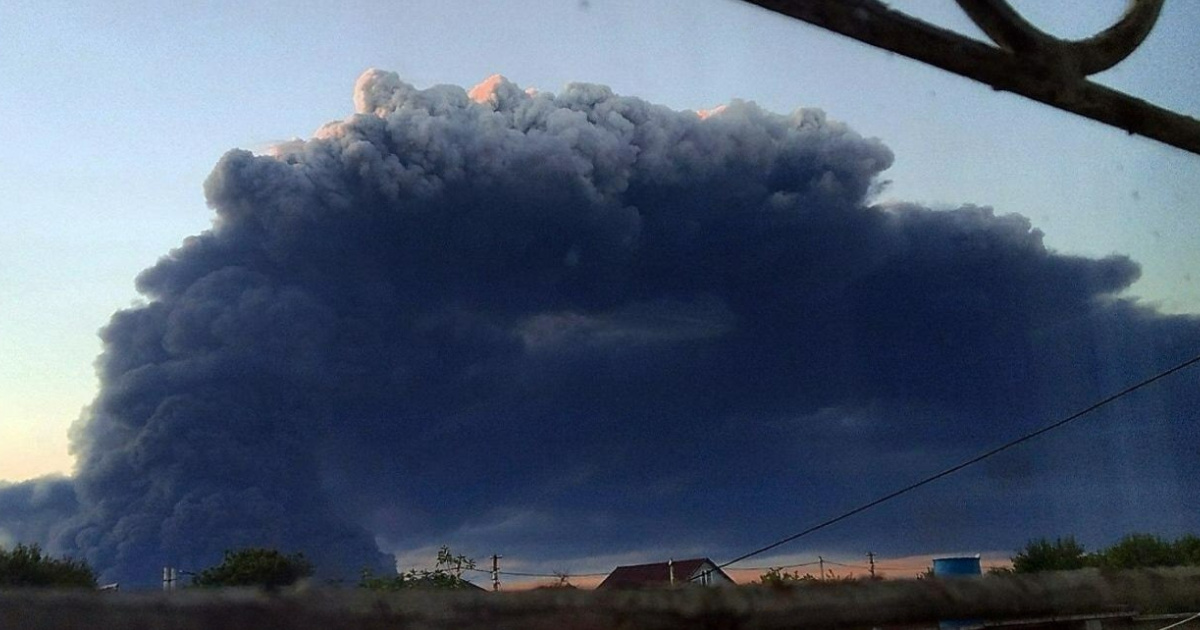
Sevastopol resident Svetlana was recently admitted to the city's infectious diseases hospital with severe poisoning. However, after several days, she was "politely but insistently" asked to continue her treatment at home.
"The doctors said it was a severe intestinal infection and put me on IV drips. For the first few days, I felt so bad that I could barely get out of bed. As soon as I started feeling a little better, the head nurse came in and told me it would be better to continue my treatment at home. At first, I was even happy because I thought I was recovering, but she explained that due to the humanitarian situation in the city, they had received orders to free up as many hospital beds as possible. Sevastopol is preparing for an outbreak of intestinal diseases because of the constant disruptions to electricity and water supplies", - she told OstroV.
According to her, medical staff have been working in near-emergency mode for several days. Due to power outages, they have constantly had to switch to backup power, conserve water, and revise the schedules of hospital departments.
"I asked, 'What if I get worse?' She replied that I could always come back, but right now they are asking everyone whose condition allows it to recover at home. They said the hospital has to be ready for any possible development.
What frightened me most wasn't even that. I realized that conditions at home are hardly any better than in the hospital. The electricity can go out at any moment, the water supply is intermittent, the refrigerator doesn't always work, and after such severe poisoning you have to follow a strict diet and carefully monitor the quality of your food. I can't imagine recovering under those conditions.
Everyone in the ward talked about nothing else. Almost nobody discussed their diagnoses anymore. People asked each other whether they had water at home, whether pharmacies were open, whether it was possible to buy drinking water, and whether the electricity had been cut off in their neighborhood. At some point, I realized that the illness itself had become secondary. The most frightening thing was the feeling that even the hospitals were already operating at the limit of their capacity, and no one knew what would happen tomorrow", - the woman shared.
At the end of June, occupied Crimea found itself in a situation that would have been difficult to imagine just a few months earlier. First, gasoline virtually disappeared from filling stations. Then widespread disruptions to electricity, water supply, and mobile communications began. The occupation "authorities" suspended fuel sales to civilians, reduced public transportation services, and on June 26 declared a state of emergency.
Whereas the russian occupation administration previously tried to convince the peninsula's residents that individual difficulties were temporary and under control, this time even official statements indicate the opposite. The head of Crimea's occupation administration, Sergey Aksyonov, explained the introduction of a state of emergency as being necessary to "ensure the stable functioning of all spheres of daily life".
Just a few weeks ago, the main topic in Crimean chat groups was the queues at gas stations. Today, however, local Telegram channels are much more frequently discussing power outages, water shortages, mobile network disruptions, and the consequences of the collapse of the tourist season.
From the fuel crisis to a state of emergency
On June 21, Sergey Aksyonov announced that the sale of gasoline and diesel fuel at all gas stations in Crimea was being suspended, both for cash and cashless payments. Fuel was reserved only for services responsible for maintaining the peninsula's "daily functioning and security". This effectively meant the suspension of fuel supplies for private vehicles.
The decision was unprecedented throughout the entire period of the russian occupation. After that, the situation continued to deteriorate. Within just a few days, power supply disruptions began, affecting not only individual settlements but virtually the entire peninsula.
On June 26, the occupation authorities simultaneously declared a regional state of emergency in Crimea and Sevastopol. To coordinate the work of all services, a headquarters for eliminating the consequences of the emergency was established, effectively receiving the authority to make quick decisions without going through the usual bureaucratic procedures.
The state of emergency also grants the "authorities" additional administrative powers. If necessary, officials may restrict access for people and vehicles to certain areas, suspend the operations of businesses and organizations if their activities pose a security threat or interfere with emergency response efforts, and determine how transportation, communication systems, and other property are to be used for rescue and recovery operations.
A separate aspect concerns funding. The state of emergency makes it possible to quickly allocate money from reserve funds for emergency recovery work, the purchase of necessary materials, the deployment of equipment, and the elimination of the consequences of the crisis without lengthy approval procedures.
At the same time, the emergency regime also provides specific support mechanisms for the population. Affected citizens and businesses may be eligible for compensation for damages, insurance payouts, or other forms of financial assistance if their property or operations were harmed as a result of the emergency.
"I have lived in Simferopol all my life, and I can't remember the city ever living in such uncertainty. In the past, if there were accidents or outages, the authorities could at least tell us when everything would be restored. Now nobody knows anything. Every day you read new reports: the power is cut off, then the water, then there's no gasoline, then public transport is reduced.
What irritates me most is how all of this affects ordinary life. Stores constantly have problems with payment terminals, ATMs work one moment and are down the next. Many business owners have generators, but they can't operate without gasoline either. Some coffee shops and stores simply close earlier because they don't know whether there will be electricity in the evening.
On television, they keep telling us that the situation is under control. But if it really is under control, then why are people standing in lines for water, charging their phones in shopping malls, and buying candles like they did many years ago? I get the impression that the city has gone back to the 1990s, only now all of this is happening against the backdrop of war. The worst part is the complete uncertainty about what tomorrow will bring", - Simferopol resident Yekaterina told OstroV.
"Nobody was prepared for this"
At the very beginning of the fuel crisis, the greatest source of frustration for Crimean residents was the hours-long lines at gas stations and the inability to refuel their cars. However, within just a few days it became clear that the gasoline shortage was only the tip of the iceberg.
Following massive strikes on the peninsula's energy infrastructure, the situation began to deteriorate rapidly. On June 25, the occupation-run utility Krymenergo announced the introduction of emergency electricity restrictions. The company explained that the dispatcher of the Black Sea Regional Dispatch Administration had been forced to implement power cuts to prevent the complete collapse of the power grid. At the same time, officials immediately warned that there would be no fixed schedules—electricity would be cut off "based on the actual load".
In practice, this meant that residents could no longer plan their day. Electricity could disappear for several hours at any moment, and with it water pumps, mobile communications, ATMs, payment terminals, and internet access would stop functioning.
The situation became especially difficult in occupied Sevastopol. The head of the occupation administration, Mikhail Razvozhayev, acknowledged that after the strikes on the energy infrastructure, the city was left completely without electricity for several days, and repair work had to be repeatedly suspended because of air raid alerts and the threat of new attacks. According to him, even after the system was partially restored, some districts continued to receive electricity from backup sources, while residents were urged to minimize consumption to avoid another overload of the grid.
The power outages hit water supply systems particularly hard. Razvozhayev openly stated that the unstable operation of the electrical grid had caused water pressure in Sevastopol's pipelines to drop. In some districts, water was available for only a few hours a day, while in certain apartment buildings the upper floors were left without water altogether.
At the same time, transportation problems emerged. Due to fuel shortages and disruptions to the power supply, the number of public transport services was reduced, while in Sevastopol passenger ferry service across the bay was temporarily suspended. No official explanation was given, but the move coincided with heightened security measures following Ukrainian strikes.
Another forced measure was the reduction of rail service between Crimea and the territory of russia, as well as within the peninsula itself. russian railway operators announced that over the next two weeks the number of trains would be cut in half—from 14 to 7 per day. Kerch became the final destination for most routes, with passengers then expected to continue by bus. Officially, this was described as a logistics optimization measure, but in reality it reflected serious difficulties in maintaining the transportation system.
"I don't like using dramatic words, but right now it feels as though Sevastopol is on the verge of a humanitarian disaster. At first everyone was talking only about gasoline, but it quickly became clear that it was actually the least of our problems. In our neighborhood (Striletska Bay), we had no electricity for exactly three days. Not for a few hours, not according to a schedule—three full days. Along with the electricity, the water disappeared, refrigerators stopped working, and people began throwing away spoiled food. Phones were charged in cars or wherever generators were still running. Communication was constantly failing, and you couldn't even find out what was happening in another part of the city.
Our local market was closed for several days. Vendors simply didn't open because refrigeration units couldn't operate without electricity, and meat, dairy products, and fish spoiled within just a few hours. People were forced to travel to other districts in search of basic necessities, but the shelves there quickly became empty as well.
Small businesses are suffering the most right now. On the ground floor of my apartment building there's a bakery, a coffee shop, a small grocery store, and a flower shop. Almost all of them have been closed in recent days. Some couldn't operate without electricity, others because of water supply disruptions, and still others simply had no gasoline to fuel their generators.
What angers me most is that apparently nobody was prepared for this. For years we were told that the city had backup capacity, that the necessary reserves had been created, and that all emergency services had practiced responding to crisis situations. But when the crisis actually came, it turned out that people were left searching for water and gasoline on their own, charging their phones wherever they could, and trying to help one another", - Sevastopol resident Sergey told OstroV.
Even marine life came under threat
The scale of the crisis in occupied Sevastopol is clearly illustrated by the situation at one of Europe's oldest aquariums—the Sevastopol Aquarium-Museum. Because of prolonged power outages and a shortage of gasoline for generators, the institution's administration openly stated that thousands of marine animals had been brought to the brink of death.
The museum's director, Yury Kravtsov, told russian journalists that the aquarium's collection includes more than 4,000 marine animals whose survival depends entirely on the uninterrupted operation of aeration, filtration, and water temperature control systems. Under normal circumstances, short-term power outages are handled by gasoline-powered generators. This time, however, the problem was caused not only by the prolonged blackout but also by the inability to purchase fuel.
"We consume about 12 liters of gasoline per hour. In the past, we could always buy fuel at a gas station and kept a reserve on hand. Now everything has changed. We've already used more than 100 liters from our emergency supply and even siphoned gasoline from employees' personal cars. At one point, we had only about 15 liters left—that was enough to keep the generators running for roughly one hour", - the aquarium's director said.
According to Kravtsov, the generators had to be operated intermittently to prevent them from overheating. However, even a one-hour shutdown of the compressors is critical for many marine organisms, which can die without a constant oxygen supply.
After the museum administration made a public appeal, city residents themselves began bringing assistance. People arrived with canisters of gasoline, allowing the situation to be temporarily stabilized. According to russian media reports, concerned Sevastopol residents managed to collect about 120 liters of fuel, while another 150 liters were expected to be delivered soon. This made it possible to keep the aquarium's life-support systems operating, but it did not solve the problem—the fuel reserves were enough only for a short period.
"When I read that the aquarium staff had started siphoning gasoline from their own cars so the fish and marine animals wouldn't die, I was genuinely shocked. This no longer looks like temporary difficulties. It means the system has simply stopped functioning. For years we were told that the city was fully supplied with everything it needed and that reserves existed for any emergency. But if one of Sevastopol's best-known museums is forced to ask people to bring canisters of gasoline, then a simple question arises: where are all those reserves we were told about?
What struck me most wasn't that people started helping. On the contrary, it shows that Sevastopol residents are not indifferent. But why should ordinary residents have to save the aquarium? Shouldn't the city authorities or the emergency services have done that?
For me, this story has become a symbol of everything that's happening in the city right now. If they can't promptly supply fuel even to a facility where the lives of five thousand animals literally depend on electricity, then what can be said about ordinary people? It feels as though the authorities only began taking action once the problem had already become obvious to everyone", - Sevastopol resident Irina told our publication.
The events of the past few weeks have shown that the gasoline shortage was only the beginning. The fuel crisis quickly escalated into problems with electricity, water supply, healthcare, transportation, and business operations. The declaration of a state of emergency became an official acknowledgment that the occupation authorities were facing not isolated difficulties but a systemic crisis, the consequences of which Crimean residents are already experiencing in their everyday lives.
By Andrii Andrieiev, OstroV