
Crimea during the war: security is replacing tourism and changing life on the peninsula
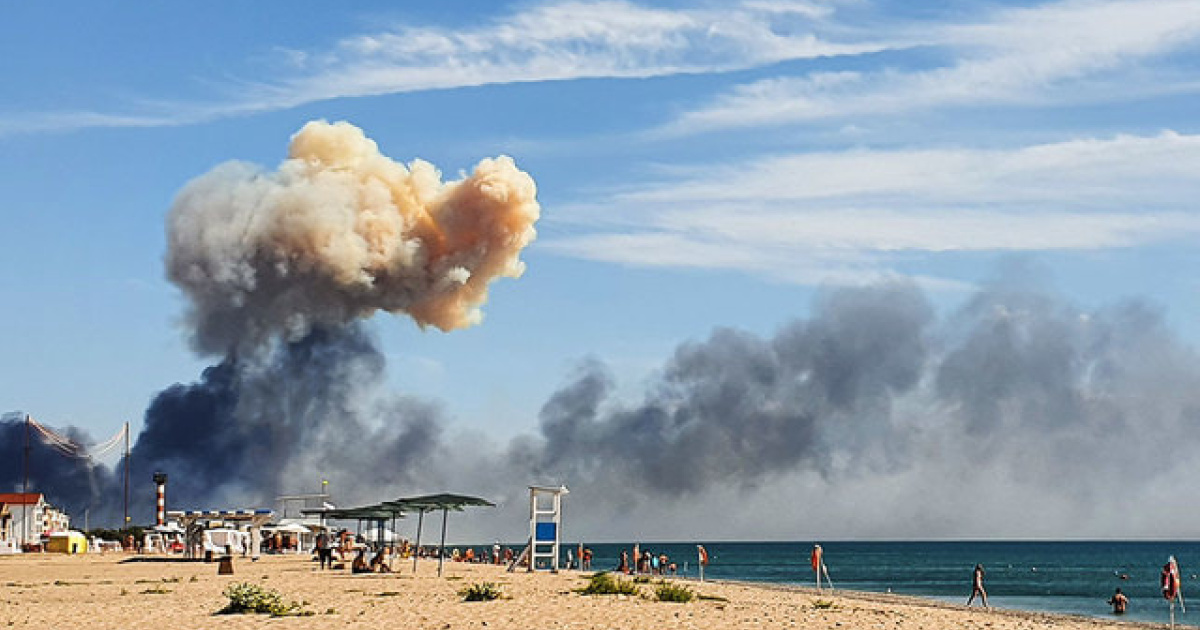
Occupied Crimea is entering another tourist season in 2026 already in a different reality, where the key factor is no longer climate or service, but the level of security. What several years ago the russian authorities presented as a "stable rear" and a "showcase of peaceful life" is gradually turning into a space of constant military tension. Strikes on military and logistics facilities, air defense activity, movement restrictions, militarization of the coastline, and the cancellation of mass events are all shaping the peninsula’s new everyday reality.
Despite statements about a "growing tourist flow", the very structure of vacations is changing: short trips instead of long holidays, last-minute bookings, constant attention to news about explosions or the closure of the Kerch Bridge.
Against this backdrop, Crimea is becoming increasingly integrated into the logic of war. The peninsula remains a key logistics hub for the russian army, which automatically makes it one of the main targets for Ukrainian strikes, alongside facilities deep inside the russian federation, particularly oil refining infrastructure in the Krasnodar Krai.
"Previously, May in Yevpatoria felt like the beginning of life. The city came alive, cafés opened, the first tourists arrived, there were many children and families on the streets. Now that is gone. There are some people, but the atmosphere is completely different — more tension than relaxation. Evenings are often quiet, but it is not the kind of peace there used to be. We constantly read the news, listen to whether air defense is operating, discuss what happened overnight. When you hear explosions somewhere nearby, you are no longer surprised, but it is impossible to get used to it either.
Tourists still come, but they are more anxious, constantly asking whether it is safe, whether it is okay to travel with children, what will happen to the bridge. Many say they came 'for a few days to take a look', not for a full vacation. And this is felt everywhere: fewer people in cafés, no huge crowds on the beaches like before. We live as if waiting for something: everything seems to function, but you understand that this is already a completely different Crimea", - Iryna, a resident of Yevpatoria, told OstroV on condition of anonymity.
Regular attacks
Recent months demonstrate a systemic change in the nature of military operations. The Ukrainian Defense Forces are increasingly attacking military and logistics facilities not only on the occupied peninsula, but also deep inside russia’s rear areas.
Tuapse, also located on the Black Sea coast, approximately 400 km from Crimea, has become a revealing example of the new war. The local oil refinery was subjected to several attacks in April, fires were extinguished for several days, and the area of oil contamination reached about 10 thousand square meters. At the same time, the russian authorities insist that the "situation is under control" and that the resort season will take place.
But it is precisely such strikes that create a backdrop directly affecting Crimea, because the peninsula is saturated with military facilities — from warehouses to radar stations. And that is exactly why it remains a priority target.
All of this can already be seen today by local residents and tourists: traditional May celebrations on the peninsula were canceled or reduced to a minimum. In particular, the "head of the Federation of Independent Trade Unions of Crimea", Nadezhda Kradenova, announced the cancellation of traditional demonstrations in honor of the May holidays.
"Traditional events in the form of the May Day demonstration have currently been canceled. However, trade unions are organizing and holding informational platforms, preparing printed materials that will be distributed among the employees", - she said.
The same applies to the celebration of "Victory Day" on May 9. For example, in Sevastopol, a way was found to combine security restrictions with a festive "facade". Instead of mass events there will be personal parades in courtyards.
According to local media, one such parade was organized for a veteran who watched the marching column from the fifth floor. The "ceremonial atmosphere" was provided by the Black Sea Fleet orchestra, while ensemble soloists performed songs "especially for the veteran".
Alongside these "chamber parades", Sevastopol authorities traditionally report on a large-scale festive program with concerts, exhibitions, patriotic events, and even "movie marathons". Formally, everything looks like a full-fledged celebration: dozens of events, thousands of participants, and broad coverage across the city’s districts. However, there is one nuance. The key all-russian campaign "Immortal Regiment" (as well as the parade itself) will once again take place online this year — meaning without the traditional mass columns. Photos of participants will simply be shown on television throughout the day.
The russian authorities in Yevpatoria decided that car rallies were already too much and banned them from May 8 to May 11 "in accordance with the recommendations of law enforcement agencies". Officials do not explain why specifically during these days or what exactly cars suddenly did wrong.
According to Ukrainian and russian sources, strikes on Crimea are becoming technologically more complex. In particular, russian media report the use of carrier drones capable of transporting several strike UAVs simultaneously, which significantly complicates the work of air defense systems.
Despite the growth of military activity, the civilian protection system in Crimea remains weak. According to local sources and media, the key problem is the absence or ineffectiveness of the warning system. Residents complain that sirens either do not work or are activated too late, depriving people of the ability to respond quickly to threats. This especially concerns Sevastopol, which regularly becomes a target of attacks.
"What scares people most is not even the explosions themselves, but the fact that you do not understand when they will happen. The warning system works very poorly. Sometimes the sirens do not turn on at all, sometimes only after something has already happened. We often learn about an attack from Telegram channels or only when we already hear explosions. Bomb shelters are a separate problem. Formally, they exist, but in reality many of them are closed, cluttered, or simply unusable. In our district, to find a proper shelter, you first need to know where to go, because nobody explains anything properly. People simply stay at home and hope it will not affect them. And that is probably the scariest thing — the feeling of complete uncertainty", - Svitlana, a resident of Sevastopol, told OstroV.
In occupied Sevastopol, at least 91 air raid alerts were recorded from January to April 2026. This is evidenced by an analysis of messages from a local Telegram channel that regularly publishes danger alerts for the city. In particular, 21 such messages were identified in January 2026, 24 in February, 19 in March, and 27 in April. Thus, on average, there were more than 22 alerts per month.
On social media and Telegram channels, local residents describe the situation more frankly. Typical messages include: "The siren is silent, but we learn about the attack only from the explosions". "At night we heard air defense systems working, but there were no warnings". "It is scary to let children even into the yard — nobody understands what will happen next". Such testimonies demonstrate the gap between official rhetoric and reality.
Another noticeable trend is the active militarization of Crimea. The coastline, previously presented as a tourist destination, is increasingly turning into a defensive zone. According to local sources, fortifications are being built on beaches, engineering structures are being installed, and certain areas are being closed to visitors. This creates a paradoxical situation: at the same time as defensive lines are being constructed, the authorities declare a "year of hospitality" and attempt to attract tourists.
A separate problem for residents of occupied Crimea has become regular disruptions of mobile internet during attacks or after reports of strike threats. During such periods, communication either slows down significantly or disappears completely, primarily in large cities, particularly Sevastopol and Simferopol.
Officially, these restrictions are explained as "security measures" and counteraction against drone operations. Russian authorities have repeatedly stated that mobile internet can be used for UAV navigation, and therefore its temporary shutdown supposedly helps reduce the risks of attacks.
However, this creates additional problems for the civilian population. During moments of threat, people are left without up-to-date information, cannot check the news, contact their family members, or call for help through online services. Complaints regularly appear in local Telegram channels that after the first explosions or the operation of air defense systems, mobile internet "goes down" and is restored only several hours later. Some users also report selective shutdowns when voice communication works, but data transmission is blocked.
"Recently the internet situation has become extremely irritating. It can simply be shut down without explanation, especially after some kind of attacks or at night. They say it's 'for security reasons', but in reality you are left without communication and don’t understand what is happening. At such moments it’s difficult even to call someone. At the same time, everyone sees that the air defense is not as effective as they claim. Explosions are heard regularly, something falls somewhere, something burns somewhere — and this has already become part of everyday life. Officially they say that 'everything was shot down', but people hear and see something different. And this undermines trust. You simply stop believing any statements and live in a state of constant tension", - Kateryna, a resident of Simferopol, told OstroV.
On the eve of the tourist season
A separate aspect is the tourist season, which traditionally was key for Crimea’s economy. The occupation authorities claim there is an increase in the flow of tourists. In particular, it is reported that "a quarter more" vacationers are expected for the May holidays than last year. Russian media also claim that a significant portion of hotels are already booked.
However, alternative assessments appear much more restrained. Experts and journalists point to a number of factors holding tourism back: regular explosions and attacks; logistical problems; high prices; militarization of the coastline.
"If you look at the booking numbers, formally the season started fairly well. There are requests, especially for the May holidays. But it must be understood that this is a different quality of demand. People come for 2–3 days, at most for a few nights, and not for a full vacation like before. A huge number of bookings are made literally one or two days before arrival, because everyone is watching the security situation. Any news about explosions or the bridge being closed — and some clients simply cancel the trip. As a result, we seem to have a normal flow, but it is unstable, fragmented, and planning work weeks ahead is practically impossible", - a representative of one of the Crimean tour operators told OstroV on condition of anonymity.
One of the key problems remains the accessibility of Crimea. The Kerch Bridge, which is the main transport artery, regularly becomes the target of attacks or restrictions. Russian media reported that on the eve of the May holidays, queues to enter Crimea stretched for dozens of kilometers, and waiting times reached several hours.
Alternative routes through the occupied territories of southern Ukraine also remain dangerous and less popular.
Another factor is the cost of vacations. According to experts, in 2026 accommodation prices in Crimea increased by 15–25% compared to the previous year. As a result, vacations on the peninsula often become more expensive than trips to Turkey, Egypt, or the United Arab Emirates.
The key factor determining the tourist season in Crimea remains the war. Even if the resort cities themselves are relatively calm, the information background — attacks, explosions, air defense activity — creates a feeling of instability.
"The main problem is not even the prices or competition with other destinations, but the constant feeling of risk. Tourists directly ask: will there be explosions, is it safe to travel with children, what will happen to the bridge. And we cannot give a clear answer. Because of this, the very structure of the market is changing: less family tourism, fewer long stays, more short trips and domestic tourists from neighboring regions of russia. Businesses are trying to adapt, lowering prices, offering promotions, but this does not compensate for the general uncertainty. Everyone understands that Crimea now is no longer a classic resort, but a territory with restrictions, and this directly affects the season", - a participant in the peninsula’s tourism market told OstroV.
Overall, May 2026 showed that the tourist season in Crimea is no longer determined by weather or prices. Its main factor is security. The cancellation of mass events, tighter controls, logistical problems, and the constant risk of attacks are shaping a new model — "tourism during war". And even if the "official statistics" demonstrate growth and optimism, the overall feeling of the region is changing: from a place of recreation, it is increasingly turning into a space of restrictions, risks, and uncertainty.
New reality
The russian information space is increasingly openly acknowledging the changing nature of the war — in particular, the expansion of the geography of strikes and the loss of the feeling of a "deep rear". Russian war correspondents are already effectively admitting: attacks by Ukrainian drones and missiles are becoming systemic, and their range is only a matter of time and technology.
"The new reality — 'Lyutyi' drones are reaching the Urals. So far this is a test run, not yet a massive raid. But taking into account the 'joint' UAV production in Europe — it is only a matter of time... I remember about three years ago, at one meeting with a very high-ranking official, one war correspondent said that we should create territorial defense units in all regions...
On the one hand, we get some kind of reserve force that knows how to load a machine gun belt. On the other hand, the country feels involved in the 'special military operation'. Back then, they looked at him like he was mad. Today we have a law on reservists who can be voluntarily involved in the defense of critically important facilities. It’s time", - wrote russian war correspondent Alexander Kots.
Similar assessments are voiced by other representatives of the pro-war community, who openly admit: russia was not prepared for this format of war, and the consequences are already manifesting themselves in strikes on critical infrastructure.
"The enemy has long-range drones. We knew this two years ago. That there would be more of them and that new missiles would appear with the help of the West was also obvious. Those among the leadership who understood this took measures at their own level. Those who preferred to listen to experts talking about 'discord in the ranks of the AFU' and reassure themselves that everything would resolve itself got the result they have now. When an oil refinery or port is burning, the issue is not only that the enemy is aiming accurately. Not only that they have drones. But that we were not preparing to repel this", - noted russian propagandist Andrey Medvedev.
A separate emphasis is placed on Crimea and the Black Sea region, where, according to russian war correspondents, Ukraine is gradually seizing the initiative.
"The enemy, after knocking out air defense and missile defense systems in Crimea, is moving on to our missile systems and MLRS. The activity of its UAVs and naval drones in the Black Sea area is not decreasing — both Sevastopol and Novorossiysk are under attack. There is also a hunt for individual — civilian (!) ships in the Black and Azov Seas. The Black Sea Fleet is regularly attacked in its harbors, and therefore it can be stated that the initiative in the waters, unfortunately, does not belong to us. The enemy is counterattacking in a number of directions on land, including the western section of the Zaporizhzhia direction, where our forces, surrounded near the settlement of Primorskoye, shared the fate of the defense pockets of Kupiansk, which, as reported to the president, had supposedly been seized twice.
Unfortunately, the awakening may be painful, especially against the backdrop of the enemy’s active preparations for the summer campaign with attempts to strike decision-making centers in our country. The enemy, emboldened, is prepared for and is already announcing actions that are under a moratorium for us", - wrote "war correspondent" Yury Kotenok.
Thus, even pro-war russian sources admit: Crimea and the southern direction are no longer a safe rear area, but are turning into one of the key risk zones both militarily and infrastructurally.
Official rhetoric continues to speak about stability, investments, and tourism development. But the facts — regular attacks, warning system problems, militarization, and rising prices — indicate the opposite. As a result, Crimea has found itself in a situation where it is simultaneously a front line, a rear area, and a tourist region. But it is precisely the first factor that is increasingly determining everything else. And as long as the war continues, this trend will only intensify.
By Andrii Andrieiev, journalist for OstroV